May, 1894: Social activist Norah O’Hanlon Quinn, now married to former priest Daniel Quinn, accompanies him on the last leg of their trip out to the Midwest. Expecting to visit American Railway Union leader Eugene Debs and his wife Kate, they learn that Mr. Debs has been called out to the company town of Pullman, near Chicago, where workers at the sleeping-car manufacturer’s sprawling works are threatening a strike.
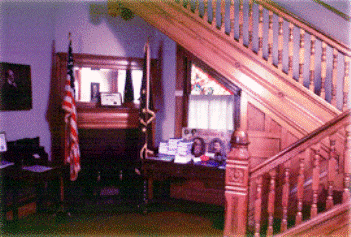
Foyer- Home of Eugene and Kate Debs
courtesy Eugene V. Debs Foundation
Excerpted from Chapter 24, Beyond the Divide–2014 finalist in the Readers’ Favorite book award contest.
Beyond The Divide is available from Village Books, Fairhaven (Wash., U.S.A.); and from Amazon
* * *
Pouring a glassful of red wine, Kate Debs told the Quinns how relaxed she felt in their company, that she was sorry they would be leaving the next day. “In a way I’m the perfect wife for Gene,” she said. “He’s away so much. And myself, I’m a bit of a recluse. The company we normally have is his. But sometimes we have to fend people off, sometimes Gene comes back so spent, it’s all he can do to lie in bed and maybe do some paperwork. I’ve really never seen anything like it. The marvelous energy that the world sees, it simply vanishes.”
“I’ve heard,” Daniel said, “how he sometimes when on the road disappears into his hotel room, sometimes for days at a time.”
Kate’s eyes shone with amusement. “Yes, there have been times at conventions, when difficulties are brewing, that he will conveniently have a ‘nervous collapse.’ They are quite real, but, nonetheless I suspect that he has developed the ability to time them at his convenience.” She refilled her glass. “Lest you think that I sit here and on lonely evenings console myself with drink, I can truthfully states that weeks, sometimes months, pass without my touching a drop. In fact, I’ve been known to scold Mr. Debs for his excesses. Oddly, for such an energetic man, he can’t hold his liquor well and he hasn’t the heart to turn anyone down. Then, of course, there are the Jamey Riley visits, where the two of them like over-aged boys go out carousing—seeking what Mr. Riley calls ‘the fruit of the vineyard.’ ”
Both Daniel and Norah recognized the talkativeness an introverted person can engage in when feeling relaxed in trustful company. Norah only widened her eyes and nodded in encouragement as their hostess continued.
“It is a refuge I provide for Mr. Debs. A safe harbor where he can entertain or hide away, as he chooses. And be in comfort and surrounded by lovely things. It may be true he would be happy in a shack down by the yards, but I’m more inclined to see that as part of a myth…a myth building about my husband. He enjoys the nice things of life. And he deserves them!”
“I remember hearing about the boots,” Daniel said. “If his sooty boots were on the porch, he was home.”
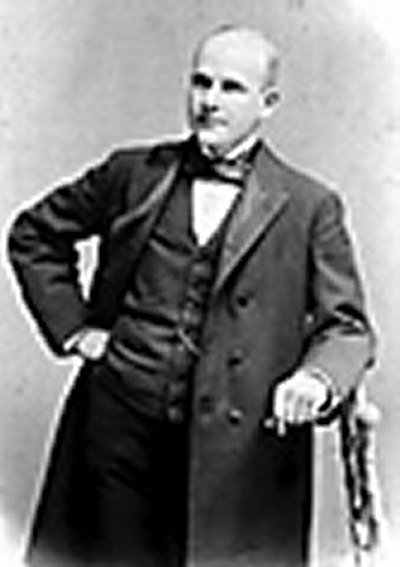
Eugene Victor Debs
courtesy Eugene V. Debs Foundation
“Pshaw!” she said. “He wears fine polished shoes when he goes out, and has sufficient-enough tailored suits, for when it fits the occasion. If you’re firing an engine, you don’t wear a suit. If you’re meeting with powerful opponents, you don’t wear overalls. The ‘producing classes,’ he would say, are every bit the equal of the business and wealthy classes, and their representative need not present himself as an inferior.”
“The umbrella,” said Norah, “…in the hallway. There’s something poignant about it.”
“And I can tell you what that is….He has no need of it!” Noticing a fiery expression in Kate Debs’ eyes not seen earlier, Norah hoped she hadn’t inadvertently touched off a raw emotion in her hostess. Mrs. Debs continued. “He’ll go all day bareheaded in the rain if it’s to help someone. All he wants is an umbrella big enough to shelter the whole country! To cover the heads of the luckless…the dispossessed. They are his family!” She looked on the verge of crying. “That we ourselves are quite childless is obvious. I am medically incapable, you see, of providing him with his own family…”
“Now you mustn’t berate yourself,” soothed Norah. “That is not your fault.”
“But an operation could have fixed it. But my mother and stepfather thought the medical risks not worth it…. I could have had it done anyway, but Gene concurred with them. I know how he aches for children of his own, yet he downplayed it…saying I was all he needed and he wouldn’t have me face the risks.”
Daniel watched as she poured another glassful, mindful of how shy people often found in alcohol a vehicle for otherwise inhibited expression.
“And yet…here I am, day after day, sewing, housekeeping…night after night, sewing, reading; cooking and eating alone…. You see, he really has no family at our home here. I am mostly a disappointment. But he would never say so! His own family barely tolerates me…. His younger brother Theodore worships the ground Gene walks on…. He loves him for much the reasons I do…yet Theodore despises me.”
She was visibly crying now. “The press ridicules me, I suppose because I don’t go around wrapped in gingham and a poke bonnet.” Norah, seated next to her, moved closer and put an arm around the younger woman, now going into heaving sobs.
“This is not Gene’s home! His home is the world out there…. But there are times…times when we’re so happy, even just a few days ago. He’d been gone so long, and we were together again—relishing his Great Northern Railway victory…and then he gets called out to this Pullman thing! But, sometimes I…how selfish I must sound! And what an ungracious hostess I’m being—please forgive me…. Yet sometimes, I can’t help but resent that he’s out there comforting the dispossessed of the nation…but there’s no one here to comfort me!” Amid soothing murmurs, Norah provided her with a handkerchief. “Do forgive me…” Mrs. Debs said, trying to compose herself. “I’m being a selfish ninny…what must you think!” She continued to sob, leaning on Norah’s shoulder.
Daniel read well the signal in his wife’s eyes, the pointing nod. He understood he was given leave to quietly go upstairs, to the guest room or the library, that at the moment male presence was unneeded, perhaps an intrusion.
* * *
Over a sumptuous breakfast cooked the next morning by Kate Debs, Daniel truthfully exclaimed it was the best he’d eaten since leaving home. Their hostess was her composed self, with no reference made to the previous evening. She said she worried over Mr. Debs’ predicament. On the brink of seeing the American Railway Union fulfill his lifelong dream of bringing together workingmen regardless of craft, involvement in the Pullman walkout could wreck the burgeoning movement. Yet she regarded the possibility of her husband’s life work going to ruin with a coolness befitting a reporter. Daniel Quinn concluded that however his own wife had comforted the distraught woman of the night before, it had done its work. Kate Debs was all efficiency in cooking and serving breakfast while keeping up a lively conversation over coffee. She thought it likely that at the upcoming A.R.U. convention in mid-June, the delegates would support a Pullman strike, moved more by emotion than by wise strategy, and that Mr. Debs would have no choice but to go along.
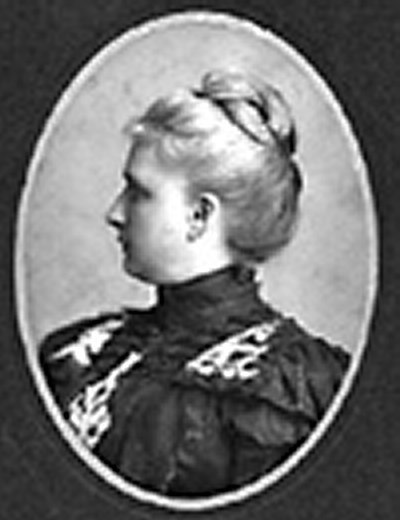
Kate (Metzel) Debs courtesy Eugene V. Debs Foundation
She continued to radiate a warmth toward her guests that didn’t let up, on the way to the depot, even as she stood on the platform, her waving handkerchief receding from view from the paired windows of the Pullman car.
Settled in the day seats of their section, Norah, with some consternation, opened the telegram from her son Bill she’d moments ago picked up at the ticket agent’s window.


 J.P. Kenna