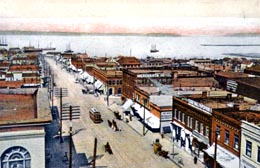
Hewitt Ave., Everett, WA., ca. 1910 Everett Public Library
On May Day, 1916, every shingle mill in the bay-side city of Everett, Washington, shut down. The men who saw, grade and pack the cedar shingles were striking. The mill owners had promised long-withheld wage increases when the price of shingles rebounded–which they had, thanks to the World War going on in Europe. Instead, the leading industrialists of the “city of smokestacks” saw an opportunity to break the back of the International Shingle Weavers’ Union.
As summer progressed into fall, the Industrial Workers of the World (I.W.W.) put out the call to support the locked-out workers of Everett. The Everett Commercial Club, backed up by the Snohomish County Sheriff’s Department, with co-operation from the Great Northern Railway, established a virtual blockade of the city, with orders to turn away any-and-all suspected “Wobbly” transient workers and activists. Men were rounded up at the railroad yards and junctions, at county roads and on the waterfront docks, to be sent away or jailed.
Exactly a century later, it can still be disputed whether it was the city that was under siege, or the locked-out mill workers and their supporters. And still disputed is who fired the fatal shots, when the events led up to the awful climax occurring on November 5th, 1916–since known as the Everett Massacre.
Excerpted from the manuscript of The Dark And Strange Flow, by J.P. Kenna. (Not Yet Published).
The Seattle I.W.W. office has concluded that a Grand Gesture is needed. The shingle weavers’ strike is being lost, while the Everett war on free speech—and freedom of association and travel—isn’t attracting the national attention it should, along with many other noteworthy events being usurped by daily press coverage of the European war.
The blockade must be broken and a Spokane-style Free Speech fight must be re-ignited.
October 30, 1916
The time to storm the Everett Blockade is now. The last of the harvest hands that fan out across the West and the Northwest have returned from the fields and orchards to the Seattle Skid Road. I joined with a group of 42 who boarded a steamboat for an afternoon run from the Colman Dock in Seattle. Our destination—Hewitt Avenue in Everett, and likely the city or Snohomish County jail.
George Reese, the member of our Seattle local who frequently advocates violence and is not well liked, did not board. I supposed he was just there to see us off and wish us well. As we backed out of the dock, he ducked into the waiting room. Though I couldn’t verify it, I had a hunch he was heading toward the nearest telephone.
As we approached the Everett City Dock, waiting for us were at least 200 men sporting white scarves—behind them, a lineup of at least 20 autos and a few motor trucks. Likely we would not be setting up soapboxes on the Hewitt and Wetmore corner. As the whistle blew its one long and two shorts approach signal, and the engine room bell rang for a reverse, I recognized among the figures on the dock Sheriff Don McRae, and Clough-Hartley logging camp manager Joe Irving. Both were armed and many of the men carried clubs. As our spring line was tossed to the dock and hooked over a piling, I detected on the faces of McRae and Irving menacing anticipation, likely exacerbated by alcohol. Murmurs went up among the passengers–those who were not a part of our group–who gathered in clusters, expressing surprise and concern over the unexpected shore-side greeters.
If any were expecting a scene, they weren’t about to be let down. As soon as the first of us set foot off the gangway onto the dock, McRae informed us with studied politeness that we would be able to meet at Hewitt and Grand, not Wetmore—an obscure corner removed from the downtown center. Our men began to file off. Next, a runty little fellow, just returned from picking apples in Wenatchee, appointed himself our spokesman. Essentially, with words and cocked head and a sneer, he told McRae to go to hell. The reaction was immediate. The melee began, with the sickening sound of clubs and revolver buts striking human heads and backs and shoulders, accompanied by utterances of grunts and growls from the deputies and cries and groans of pain from our own men and boys, unarmed and outnumbered six-to-one.
The other passengers watched in horror. Irving managed to club one of his fellow deputies. I was among the lucky ones not to be clubbed as we were herded toward the line of waiting autos and trucks. Once filled, the grim motor procession lumbered off, with McRae, three deputies and our mouthy “spokesman” leading in the six-passenger Reo, the car well-remembered from our recent encounters at Snohomish and Maltby. We soon observed we weren’t headed to either of the jails. As evening turned to darkness, our “motorcade” rumbled into the thinly-populated farm and woodlands south of the city.
At a place called Beverly Park, where the concrete county road crosses the Seattle-Everett interurban railroad track, we were herded out of back seats and truck beds and made to form a line along the track. Since leaving the boat, there’d been no more songs from our spirited group. All joking and wisecracking had given way to stony silence. It looked as though we weren’t simply about to be merely turned loose, to walk the tracks back to Seattle. I noticed the man next to me, who on the way over had quietly introduced himself to me as C.H. Rice, now could not control a trembling in his hands. “We’d better stay close together, ’bo,” he quietly uttered. “It looks like we’re about to get tamped up.”
Remembering back at the dock, there’d been looks of concern coming from a few deputies. Perhaps they were fearful McRae or Joe Irving might commit murder in front of witnessing boat passengers. I looked around now and, in the glare of electric auto headlights, saw not a single expression reflecting humaneness. Any deputy with misgivings must have either left the group or gotten further liquored up.
In the rain, we were made to form a line, leading from the road crossing, then down along the tracks to a cattle guard. I saw the deputies were forming a gauntlet for us to run, lining up on both sides of the track, holding aloft gun-butts, black-jacks, loaded saps, devil’s club stalks and pick-handles. Some of our group were mere boys, white-faced with terror. One attempted to run off into the woods, but was picked up by 260-pound Deputy Hawes and, with help from a few other white-scarf wearing assistants, was beaten into insensibility. When one of our men pleaded, “Have a heart, man! He’s just a kid,” he too was hauled out for a beating. Some had their pants yanked down, to be whipped with the spiny devil’s club. Down along the track we stumbled, trying to shield our heads from the blows. Joe Irving gave the most savage beatings, with utterances about each of us paying for his accidental clubbing of fellow-deputy Joe Shoefield, back at the dock. Deputy Fred Luke (I’d learned a number of names from my time spying) swung his club so hard the leather thong parted and the implement went flying off into the dark woods.
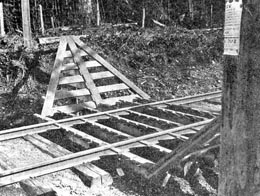
Beverly Park Cattle Guard The Everett Massacre
Bullets wizzed over the heads of a few more men who attempted escape. Like most of the men, by the time I reached the cattle guard I was bloody and aching, but was one of the less-severely beaten. Now, a cattle guard is like a fence across a road or railroad track. No hoofed beast will walk over its narrow steel strips and spike-like projections. Over this, one-by-one most of us torturously crawled. A few tried to walk or run the obstacle. As I crawled across I saw in the lantern light a shoe stuck between the steel strips. On and around the spikes were patches of hair. On the track ballast were dark splotches that had to be blood, and what looked like a few teeth. I watched through a bloodied eye as Deputy W.R. Booth ran off into the trackside brush. Above the piteous cacophony of outcries and groans, I heard him retching—the only one of our oppressors to display any sign of humanity. Managing to glance back, I saw yet a few more men being led from the autos toward our gauntlet, a deputy on each side holding up each victim’s arms, as two more pummeled with fists their unshielded faces.
McRae and Deputy Hawse picked out a few men and quizzed them as to whether they were I.W.W.s. “Say you ain’t, and we’ll let you go.” Some recanted and were rewarded with further blows to their faces. A Dr. Allison, part of the Commercial Club group, instead of looking after the more severely injured, gleefully administered some of the most savage punches and kicks.
A man appeared along the tracks shining an electric-torch. “What in God’s name is going on here?” he demanded. “We heard the ruckus from our house a quarter-mile away!”
“It’s okay, fella,” Deputy Lukes replied, “we’re just beating up a bunch of I.W.W.s.”
Six men, three on each side, rained pick-handles on our heads if we attempted to straighten up and walk across the cattle guard. I took my chances crawling with the steel strips and spikes cutting into my palms, knees and shins.
With the last man across, the scene eerily quieted. Men lay groaning in the rain in contorted positions. CH. Rice had an obviously dislocated shoulder. Dr. Allison, hearing his pleas, looked him over and told him there was nothing wrong with him, that he best hurry up and beat it back to Seattle.
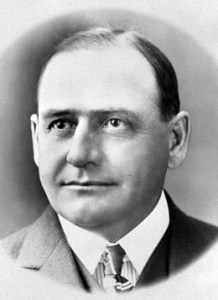
Snohomish County Sheriff Donald McRae (1886-?) Everett Public Library
There were still sporadic outbursts. I heard McRae shouting to a man named Sam Rovinson—who’d been beaten with a length of gas pipe—“to hell with your constitutional rights! You came here to Snohomish County. Well, we are the County!” As Rice continued to plead in agony that he needed help for his shoulder, two deputies argued over whether to “shoot him or to burn him.” McRae finally sauntered over. “Oh, let him go,” he said. “We won’t be seeing him or any of this bunch up here again.” Those of us who could pull ourselves up tied together a makeshift sling for Rice, using handkerchiefs and neck ties.
The man who’d come over from a nearby farmhouse to investigate, whose name was Ketchum, said he’d return with his brother with bandages and iodine and pain pills. We looked around after the last of the Commercial Club deputies had skulked off and the last auto had chortled off into the chilly night rain. Nobody was dead. An interurban trolley car approached and made a stop at the crossing, its headlight shining on crawling, limping men, on bloodied men and boys. The motorman inquired if there’d been some sort of wreck. With the help of the handful of passengers, we bundled the most injured into the car, laying them out on the seats. Those of us who could still manage to walk, choosing not to take up precious space, watched the car go clattering down the track toward Seattle, the trolley pole sparking under the wire in the night rain. Being told it was the last car for the night, we began the 25-mile walk.
To be continued:
Sources: Mill Town, by Norman H. Clark; Revolution in Seattle, by Harvey O’Connor; The Everett Massacre, by Walker C. Smith


 J.P. Kenna