“If you were not so dense and so stupid, as some of you English people are, you could have had these men fighting for you…”
-John Dillon, Irish Nationalist Party, British House of Commons
Sunday, May 7, 1916
Eamonn Kent, Commandant of the Irish Volunteers; Michael Mallin, Chief of Staff of the Citizen Army; and Sean Heuston and Con Colbert—both unit commanders of the Volunteers—attended Mass at the Kilmainham chapel. Prison Chaplain Eugene McCarthy celebrated the Eucharist.
That afternoon, all four officers of the Rising were told they would be executed at sunrise the coming morning. In his cell that evening, Colbert wrote notes to his brother and sisters, telling them he’d requested to have no visitors, to spare them further pain. To his sister Nora he wrote, “Don’t blame me—perhaps God’s way of saving my soul.”
In the adjacent cell, Mallin wrote goodbyes to his parents and his wife—four month’s pregnant—giving regards to their four children, ages two-and-a-half to 12. To her he wrote:
I do not believe our Blood has been shed in vain. I believe Ireland will come out greater and grander but she must not forget she is Catholic, she must keep her Faith.
I find no fault with the soldiers or police. Pray for all the souls who fell in this fight, Irish and English.
In the early hours, Michael Mallin’s family visited, receiving some comfort from a Dominican priest, Father Brown. Family composure was nearly lost when little Sean asked for his Da‘ to come home with them.
Monday, May 8, 1916
Father Albert went with Sean Heuston to the Stonebreakers’ Yard. Father Augustine accompanied Michael Mallin. The work of two firing squads completed, the two Capuchin friars soon returned to the yard, escorting Con Colbert. The soldier blindfolding him first shook his hand, then looked away, choking back tears. Following the final pistol shot, Father Albert anointed the unassuming young baker’s clerk, now fallen before him, while Father Augustine was led back to the cells to accompany Eamonn Kent.
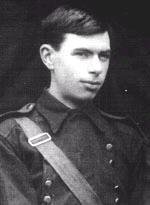
Sean Heuston
Unit Commander
Irish Volunteers
from Wikipedia
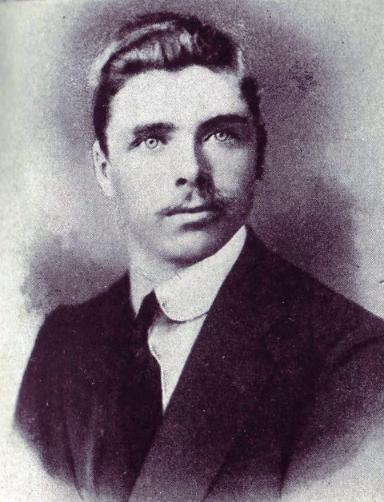
Michael Mallin
British Army to Silk Weaver to Irish
Chief-of-Staff of Irish Citizens’ Army
from IrishCentral
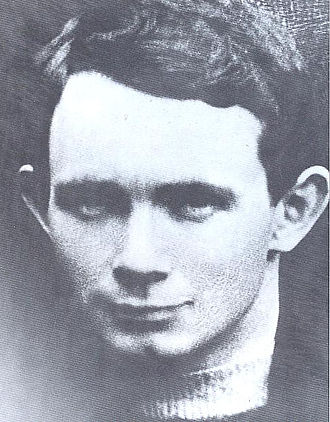
Con Colbert
Unit Commander
Irish Volunteers
from Wikipedia
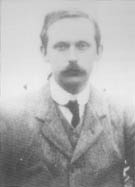
Edward Kent
(Eamonn Ceannt) Commandant, Irish Volunteers
from Wikipeda
In the Tower of London, Sir Roger Casement swallowed South American Indian arrow poison. He was found by a guard in his fetid cell and taken to have his stomach pumped.
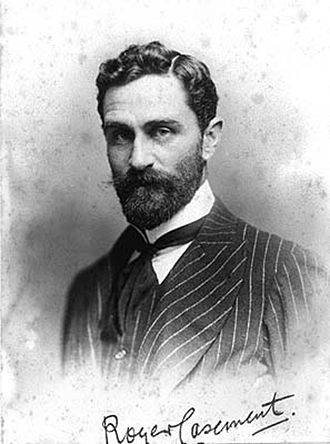
Sir Roger Casement
from Wikipedia
At 2 p.m. in Dublin, Eamon de Valera faced court martial and—pronounced guilty—was transferred to Kilmainham jail.
John Dillon, of the Irish Nationalist Party, saw his pleas for leniency—first to General Maxwell, then to Prime Minister Asquith himself—fall on deaf ears. Hearing of British soldiers shooting 16 non-fighting civilians Friday night—shot to death in their homes on North King Street—and the rampages of the deranged Captain Bowen-Colthurst, more than once Dillon was heard to say:
“Cromwell is risen from the dead and is stalking the land again.”
Kattie Clarke, after loosing her husband and brother, miscarried her baby. It would have been her and Old Tom’s fourth child.
Now in the prison where nine of his fellow rebels had been so recently kept and shot, de Valera grew certain he would be the 10th. He thought of his boyhood in Bruree, County Limerick, amid the hills, tending cows or hiking along his favorite brooks. And of serving as an alter boy for Father Eugene Sheehy, (uncle of Hanna Sheehy, who became suffragist Hanna Sheehy-Skeffington). And of Sinead Flanagan, the girl who taught him Gaelic and became his wife.
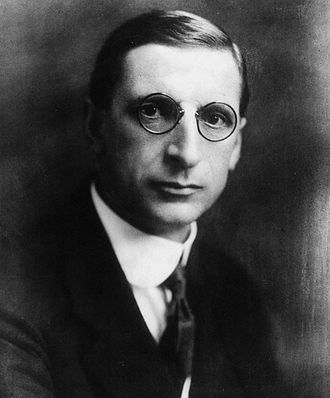
Eamon de Valera
Mathematics Teacher Turned Rebel Commandant
Later- President of Irish Free State
from Wikipedia
Still musing in his cell, Eamon de Valera wrote to Sister Gonzaga, a colleague at Trinity College, where he taught mathematics. He asked her to pray for his soul, and “for my poor wife and little children who I leave unprovided for.”
Tuesday, May 9, 1916
At 11 a.m., Sean McDermott was found guilty at court martial, and transferred to Kilmainham Jail.
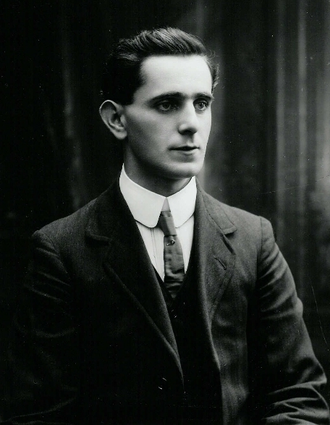
Sean McDermott
from Wikipedia
At the Castle that afternoon, James Connolly, his foot growing increasingly gangrenous, was dressed in clean pajamas and moved on a mattress, propped up so as to face court martial. In a monotonous drone—incongruous with his stirring words—he gave his defense:
“We went out to break the connection between this country and the British Empire and to establish an Irish Republic. We believe that the call we then issued to the people of Ireland was a nobler call, in a holier cause, than any issued to them during this war, having any connection with this war.
“We succeeded in proving that Irishmen are ready to die endeavoring to win for Ireland those national rights which the British government has been asking them to die to win for Belgium. As long as that remains the case, the cause of Irish freedom is safe.
“Believing that the British government has no right in Ireland, never had any right in Ireland, and never can have any right in Ireland, the presence, in any one generation of Irishmen, of even a respectable minority, ready to die to affirm that truth, makes the Government forever a usurpation and a crime against human progress.
“I personally thank God that I have lived to see the day when thousands of Irish men and boys, and hundreds of Irish women and girls, were ready to affirm that truth, and to attest it with their lives if need be.”
Later visiting his wife Lillie and eldest daughter Nora, Connolly suggested his wife should return to the States. That for financial support she could get Skeffy to edit and publish his writings. Nora then informed her father that Mr. Skeffington had been shot dead in the back by an Irishman—drunk in the line of duty, but acting with total deliberation—serving as an officer in the British army. Then she had to tell him of the executions in the Stonebreakers’ Yard—that of the signatories of the Proclamation, there remained alive only he and McDermott.
Wednesday, May 10, 1916
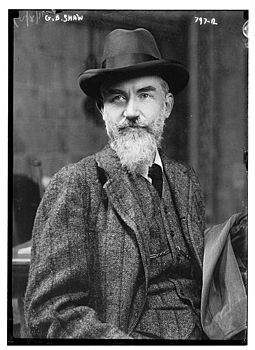
The London Daily News featured an article by George Bernard Shaw, wherein he affirmed his own Irishness while castigating the British for their seeming ignorance of the fact that each man executed “only adds…to his glory in the eyes of his compatriots and of the disinterested admirers of patriotism throughout the world.” And that, especially given the Irish character, “…it is absolutely impossible to slaughter a man in this position without making him a martyr and a hero, even though the day before the rising he may have been only a minor poet.” He concluded with:
I remain an Irishman, and am bound to contradict any implication that I can regard as a traitor any Irishman taken in a fight for Irish Independence against the British government, which was a fair fight in everything except the enormous odds my countrymen had to face.
George Bernard Shaw
Irish Playwright
from Wikipedia
In the afternoon, John Dillon—along with John Redmond, champion of Home Rule—spoke before the House of Commons:
“You are letting loose rivers of blood, and, make no mistake about it, between two races who, after 300 years of hatred and strife, we had nearly succeeded in bringing together.
“It is the first rebellion that ever took place in Ireland when you had the majority on your side. It is the fruit of our life work. We had risked our lives a hundred times to bring about this result. We are held up to odium as traitors by those men who made this rebellion; and our lives have been in danger a hundred times during the last 30 years because we have endeavored to reconcile the two things, and now you are washing out our whole life work in a sea of blood.”
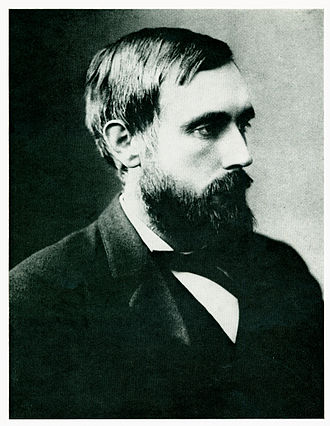
John Dillon
Irish Nationalist Party, House of Commons
from Wikipedia
Ignoring the increasing catcalls in the chamber, he accused Englishman of thinking of Ireland as nothing more than England’s back yard. The pandemonium increased when he began praising the rebels.
“I say I am proud of their courage, and, if you were not so dense and so stupid, as some of you English people are, you could have had these men fighting for you, and they are men worth having. It is not murderers who are being executed: it is insurgents who have fought a clean fight, however misguided, and it would have been a damned good thing for you if your soldiers were able to put up as good a fight as did these men in Dublin!”
This last verbal barrage directed toward high ranking military officers seated in the gallery, all demands for order in the chamber went unheeded. Dillon paused to let the pandemonium he’d unleashed die down. He then contrasted the present British policy in Dublin with that of Lincoln following the American Civil War, where not one Southern instigator or leader or officer was executed—allowing the fractured nation to begin the perilous process of reunification.
Dillon then concluded with a reference to the Skeffington shooting. To his surprise, Prime Minister Asquith reacted with shock and surprise—he hadn’t even been informed of the murderous misdeeds of one of their own officers. Asquith then added a closing comment to Dillon’s speech:
“So far as the great body of insurgents is concerned I have no hesitation in saying in public they have conducted themselves with great humanity which contrasted very much to their advantage with some of the so-called civilized enemies which we are fighting in Europe. They were misled, almost unconsciously, I believe, into this terrible business.”
Reading the Confessions of St. Augustine in his cell in Kilmainham Jail, de Valera was informed he was sentenced to death. Reacting without flinching to the expected announcement, he then heard the sentence was commuted to life imprisonment. Eamon de Valera remained stone-faced.
With news spreading that “Dev” was to be spared the firing squad, hope went around Dublin and throughout the provinces that the purges of “Bloody Maxwell” were coming to an end. And that Sean McDermott—a cripple—and James Connolly—severely wounded—would be spared.
Reports came from London that Roger Casement was allowed a visit by a lawyer, thanks to the intervention of a friend by the name of Gertrude. Finding the once-esteemed man to be in deplorable condition physically and mentally—still in the same suit he’d been wearing since his submarine journey to Tralee—the lawyer threatened to take what he saw to the American press. Sir Roger’s conditions began an immediate improvement.
In New York, John Devoy tried to reassure Molly Monteith that her husband Robert, who’d made the submarine journey from Germany with Casement, was alive—though he himself wasn’t certain.
Reference: Rebels, by Peter De Rosa
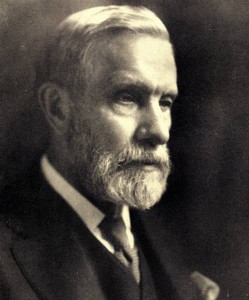
John Devoy
from Wikipedia


 J.P. Kenna
Very moving account of a terrible time.
Thank you again.