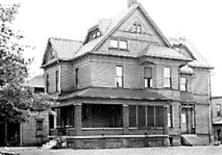
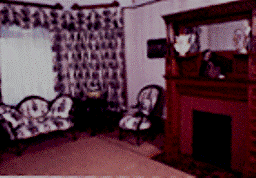
Home of Eugene and Kate Debs, in Terre Haute, Indiana
courtesy Eugene V. Debs Foundation
May, 1894: Social activist Norah O’Hanlon Quinn, now married to former priest Daniel Quinn, accompanies him on the last leg of their trip out to the Midwest. Expecting to visit American Railway Union leader Eugene Debs and his wife Kate, they learn that Mr. Debs has been called out to the company town of Pullman, near Chicago, where workers at the sleeping-car manufacturer’s sprawling works are threatening a strike.
Excerpted from Chapter 24, Beyond the Divide–2014 finalist in the Readers’ Favorite book award contest.
Beyond The Divide is available from Village Books, Fairhaven (Wash., U.S.A.); and from Amazon
The second telegram was from Kate Debs. It informed them Mr. Debs was on his way to the troubles in Pullman and would, regrettably, be unable to welcome them to their home, but that she was still expecting the Quinns to arrive at Terre Haute on the 15th of May and to be her guests for a few days.
The news of Debs’ departure came as no surprise once they learned that at 10:30 a.m., the 11th of May, 3,000 Pullman workers put down their tools and walked off their jobs.
The day following the Quinn’s arrival at the Debs home, Norah penned a letter back to Riverport, New Jersey, to longtime family friend Kathleen Scanlon:
351 North 8th Street
Terre Haute, Indiana
May 16, 1894Dearest Kathleen,
How are you, my sweet, and, I must of late confess, neglected friend? My guilt at thus far sending you nothing but picture postcards knows no bounds. So here I am attempting to make amends, by writing you a full-fledged letter, with accompanying hope that it reaches you before our own arrival home!
As I’m certain Mr. Scanlon keeps you, his lovely and uncomplaining wife, apprised of what’s going on in that often dreadful “man’s world,” of strikes, walkouts, lockouts, grievances and reprisals, I shall confine this missive to the pleasanter things that interest those of our sex whose responsibility it is to keep and maintain a place of beauty and sustenance, to give the strength to our men to daily face the world and its grim machinations (which they tend to create!).
With that said, I shall describe my first impression of the troubled town of Pullman, Illinois, which we toured last month on our way out to St. Paul. What first struck my eye, even more than the imposing buildings laid out so neatly, was the 3-acre lake as a centerpiece. Being a warm spring following a nasty winter, the azaleas were beginning to grace the park-like setting with their shimmering brilliance of crimson and pink, while overhead the crabapple and cherry blossoms showered a hint of white and pink mixed with new green. In beds circular and oblong, and bordering paths, tulips of every hue waved in the gentle breeze, sharing the clear fresh earth with the gentle-to-the-eye pastels of late-blooming narcissus.
Hard it was for me to resolve this emerging spring beauty, along with a town centered around architectural grandness, what with church, hotel and market, standing sentinel over blocks of handsome though rather uniform brick homes, knowing that not far from the surface there lurked a sense of despairing submission in its cowed inhabitants — even privation. In the masking of regimented suffering by red-brick architectural grace, I’m reminded much of the domed-magnificence of our New Jersey state prison so very visible from our own homes.
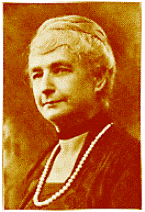
Kate (Metzel) Debs
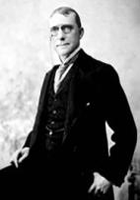
courtesy Eugene V. Debs FoundationToday, in a more cheerful setting, we are the guests of Mrs. Eugene Debs, known to those close to her as Kate. As I write this, Mr. Quinn and I are happily ensconced in the upstairs guest room, known as the Riley room for its frequent honored guest, the poet of “Little Orphan Annie” and “When the Frost is on the Pumpkin.” I face a most decorative though tonight unneeded green-tiled fireplace with carved-oak mantle. That I am overcome with unworthiness as I sit and write at the very desk frequented by James Whitcomb Riley goes without saying, though truth be told, I enjoy the waxy sentiment of his work but have never much admired it as real poetry.
James Whitcomb Riley
from WikipediaThe house was designed and to a fair degree built by Mr. Debs himself. In its squarish, homey design, four rooms over four, topped by a profusion of gables and dormers, it is the essence of Eugene Debs, enlarged and made into wood. Sitting on a corner double lot, generous porches front the streets on two sides. The neighborhood is fairly well-to-do, though a far cry from the Summit Avenue of James Hill — or the Prairie Avenue of George Pullman. Mrs. Debs chose the lot, as she likewise decreed the size of the house — Mr. Debs, I’m certain, being contented enough with the 3-room flat they once rented, and were he needed only to please himself, would be at ease in a shack behind some railroad roundhouse. But Kate Debs — a bright, charming and overly-gracious hostess, by the way — brought some money into the marriage thanks to her Swiss stepfather, who established Terre Haute’s largest drug store, though she was born in humble circumstances. She, like you, Dearest, is very astute at living simply in order to make her money grow, her only ostentatiousness being in clothes and home décor. But in the décor, she must not be fully credited, or blamed, if, like me, you aspire to an unfashionable unadorned look. Upon their marriage nine years ago, the gifts from engine firemen and other railroad workers piled in daily to the depot express office, many from distant places and people Mr. Debs has no recollection of meeting personally. These wedding gifts soon overwhelmed the rented flat and many were put into storage — but at last, a home has been built for them and their recipients.
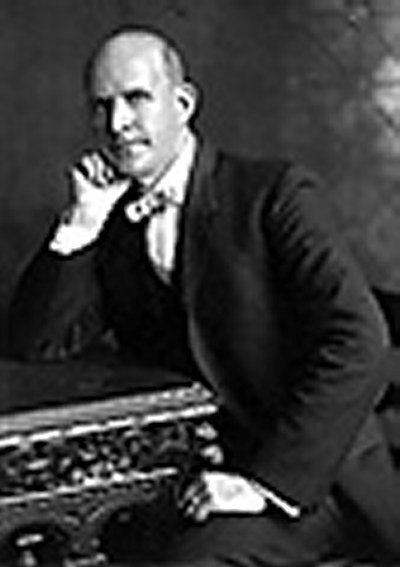
Eugene Victor Debs
courtesy Eugene V. Debs FoundationArriving as we did in Terre Haute yesterday evening, Kate Debs greeted us at the depot, looking regal in a royal maroon plumed hat and tapestry-paneled suit of mauve, gold and brown. More than keeping up her end of the lively conversation in the hired hack, some blocks past the city center we came upon the corner house, where grew a sturdy shade tree destined to someday dominate the yard, along with boxes of petunias splashing purple and pink where the noon sun would hit, the porches partly shaded by morning glories twining through taught string stretched from railing to roof. Opening the figured-glass front door, the first thing Mrs. Debs pointed out was Mr. Debs’ forgotten umbrella, still standing folded in its rack. Ahead in the generous reception hall, a bronze-winged Mercury perched on the newel post, the evening light filtering dappled through the front door. Glancing upward, sunlight from the opposite direction illumed stained-glass roses and daisies on a window gracing the turn of the stairway.
Parlor, Debs Home
Courtesy Eugene V. Debs FoundationThe parlor, my Kathleen, is sumptuous, reflecting in Mrs. Debs a taste equal to your own. Water-blue wallpaper, patterned with long white lilies, compliments the amber tiles of the fireplace. You would adore the crystal prisms hanging from the lampshades, not to mention the hanging Tiffany lamp with its green leaves and white lilies and bulrushes. As our hostess gave us a tour, she would light the gas fixtures, dispelling the oncoming darkness. There on the lamps, patterns of purple grapes and green leaves and enameled flowers shown to complement the pastoral wallpaper patterns and fine-grained varnished woodwork. The remaining rooms had fireplaces tiled with rain-washed blue. Mantels were of carved golden oak, except for the upstairs library, being of Honduran mahogany, the perfect pedestal for a French Rococo clock, one of many wedding gifts sent by the railroaders and for the first five years, confined to the 3-room flat. Kate pointed out a silver water carafe from the Kansas City lodge of the Brotherhood of Locomotive Firemen, a cut glass set from Boston, and — from the Brotherhood lodges of Chicago — a parlor set of polished mahogany, upholstered in blue, olive and old-gold plush. There were silver service sets, and a Persian jar for preserving rose petals. With eight rooms, there was now floorspace for the Oriental throw rugs and flowered Brussels carpets. There was now a high enough ceiling to hang the mother-of-pearl lamp with its pale-violet glass prisms. Ensconced in the library was the leather rocking chair, a gift from Mr. Debs’ local Vigo lodge of the Brotherhood. And from Mr. and Mrs. Robert Ingersoll had come a reproduction statue of Winged Victory.
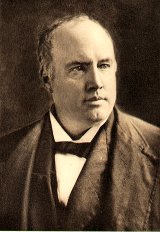
Robert G. Ingersoll
from WikipediaAnd speaking of the Ingersolls, Mr. Quinn was a bit distressed he had missed a visit from them by only a few days, my husband always wanting to engage the man he so admired for his intellect and oratorical skill — to challenge him in a debate that our own Catholic faith, with some of the more literal interpretations and obscure dogmas cast aside, could stand up to the test of Reason better than Mr. Ingersoll’s loudly-touted Atheism. Mrs. Debs is especially fond of Mrs. Ingersoll, describing the pretty, petite woman always in brown to match her wren-brown hair as a contrast to her slow-moving ponderous husband Robert. She is a feminist Deist, you know, and claims that Eve provided the rib to create Adam, who then brought down ruin on “human” kind by tempting his wife to an apple!
And so, my dearest, I shall close off here, marveling that as I enter without reservations into Old Age, I have at last now journeyed half-way across the American continent; that we are guests in the house of Mr. and Mrs. Eugene Debs, having recently met the Archbishop of St. Paul, and Mr. James J. Hill; and that I place pen in drawer at the desk where doubtlessly “Jamey” Riley penned many a rusticated verse, his writing a demonstration of his own adage that “writing poetry is like giving birth to a rough-shod colt.”
So soon we shall be home, Kathleen, and perhaps we might resume our arm-in-arm walks about the quieter streets under protective canopy of maples and elms. The best to your dear Francis and your fine broths of sons Ed and Mike and Baby John, and to Jimmy in his far-flung adventures, and to bright, lively Mary — namesake of your dear-departed Mother, whom we all do so miss, and of the Mother of our Dear Savior, at whose feet we shall one day re-convene.
All Love,
Norah
Following dinner on the second evening, Mrs. Debs asked her guests if they would object should she pour herself a little wine as they retired to the parlor. She offered Daniel Quinn a cigar, laughingly quoting Robert Ingersoll, who would observe “it’s better to smoke in this life than the next.” Daniel declined, saying it wouldn’t be fitting to smoke in female-only company.
To be continued
References–Harpsong for a Radical, by Margurite Young; Eugene Debs, Citizen and Socialist, by Nick Salvatore; The Bending Cross, by Ray Ginger


 J.P. Kenna
I had no idea his home was still standing; so many working class homes were poorly built that they didn’t last for us to examine in later generations. Have you also had the opportunity to read Debs’s speeches?
I’m assuming Kate Debs, who brought some money into the marriage, insisted on a showy, well-built home.
My first two books contain excerpts from Debs’ earlier speeches and writing–many from The Locomotive Firemen’s Magazine, which he edited in his younger years.
Thank you for commenting.