Happy Birthday Eugene Debs

“Remember, Remember, the fifth of November!”
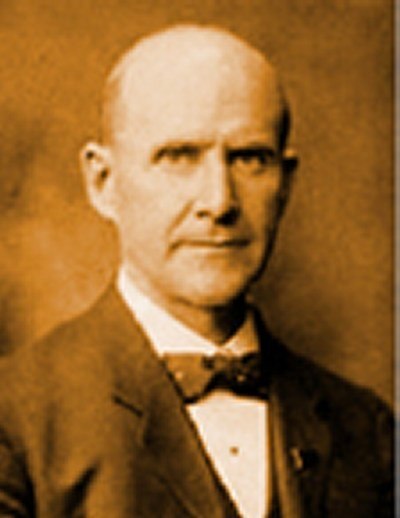
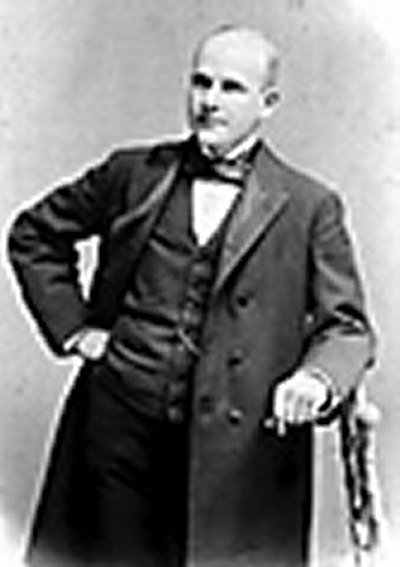
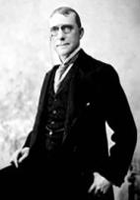
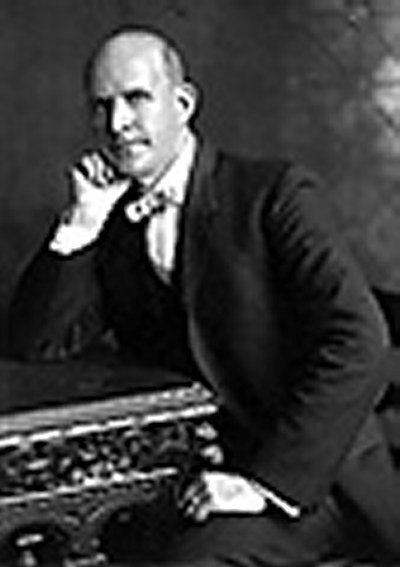
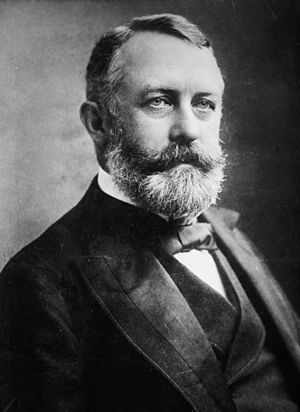
Eugene Victor Debs Born November 5, 1855 courtesy Eugene V. Debs Foundation

Eugene Victor Debs
Born November 5, 1855
courtesy Eugene V. Debs Foundation


The old school-child chant of course refers to Guy Fawkes, sometimes dubbed as “the only honest man ever to enter the Parliament.” This date–celebrating the foiling of the 17th century plot to bomb the in-session workings of the English government–might also acknowledge a less sinister and more recent figure of history, who should be celebrated as one of the most honest men ever to run for President of the United States.

Eugene Debs ran for president first in 1900, as candidate for the Social Democratic Party, a reorganization of his old American Railway Union. In 1904, 19o8, 1912 and 1920, he ran as the candidate for the American Socialist Party–his 1920 campaign being run from the federal prison in Atlanta, while serving a sentence for opposing U.S. entry into World War One.

Eugene Victor Debs came from Terre Haute, Indiana. His French-Alsaceian immigrant parents ran a grocery store and imbued in their children a love of such writings as Victor Hugo’s Les Miserables. Young Gene Debs’ early heroes included Patrick Henry and Tom Paine. He felt no attraction to foreign revolutionary movements and found Karl Marx to be “tedious.” Among his best friends was revered Hoosier poet, James Whitcomb Riley.

Starting work as a painter at age 15 for the Vandalia Railroad, Debs’ speaking and organizational abilities soon led him into leadership positions with the Brotherhood of Locomotive Firemen and editorship of its journal, The Locomotive Firemen’s Magazine. Though he rode many miles shoveling coal into the fireboxes of the big black locomotives, in his early 20s he was already spending more time travelling to organize fellow workers. And expanding The Magazine into the most widely-read labor journal of the time, adding features on history, law, and even a women’s section.

In his new found pulpit as associate editor, Debs stated the purpose of their union was “…to give to railway corporations a class of sober and industrious men…. To give to our superior officers trained and intelligent labor shall be our highest aim.” He spoke out against class conflict and lent no support to the great railroad strikes of 1877.

As the “guilded age” matured and rising industrial productivity worsened rather than improved the lives of the working people, Debs and other observers became disillusioned–watching corporate power becoming more concentrated in the hands of a rising class of the super-rich, more often than not aided–rather than regulated–by Washington, D.C.

The counteracting rise of a labor movement, dominated by the Railroad Brotherhoods and the American Federation of Labor (AFL), favored organization by craft. Efforts to better workers’ conditions led to futile strikes where various labor organizations often worked against each other–even as corporate owners and managers colluded for their own benefit. To Debs, the only solution was a labor union inclusive of all crafts–and ideally, without regard to nationality, gender or race. And so in 1890 he formed the American Railway Union (ARU).

As the worst depression up to that time paralyzed the economy in 1893, workers saw themselves and their families as the ones bearing the punishment for the excesses in speculation and stock overvaluing brought about by the gamblers and idlers of Wall Street.
James Jerome Hill The "Empire Builder" of the Great Northern Railway courtesy Minnesota Historical Society

James Jerome Hill
The “Empire Builder” of the Great Northern Railway
courtesy Minnesota Historical Society

In May of 1894, The American Railway Union shut down the Great Northern Railway. The road remaining profitable, its owner James J. Hill had decreed wage cuts. In St. Paul, Gene Debs and Jim Hill met face-to-face, impressing each other as worthy adversaries, but neither willing to compromise. A suggestion was made to have the labor-management disputes arbitrated by a group of prominent St. Paul business leaders, led by flour-milling magnate Charles Pillsbury, a major shipper on Hill’s Great Northern line. Surprisingly, the ad-hoc jury of leading mid-western industrialists ruled in favor of the American Railway Union. Wage cuts were recinded and trains between the Twin Cities and Seattle began to roll again.

But while Debs and the ARU were relishing what was considered the first successful labor strike ever in America, trouble was brewing in sleeping-car maker George M. Pullman’s company town of Pullman, Illinois. With wages being pared while cost of groceries, coal and other essentials at Pullman’s company stores increased, in late May of 1894 the thousands of employees at the car manufacturing works, adjacent to the company town, staged a walkout. The newly-victorious American Railway Union voted to support the strike with a nationwide boycott on railroad sleeping cars operated by the Pullman Company. Debs had advise against the move, fearing it would destroy the union he’d so recently created. But as leader of a democratic organization, he felt obligated to support the rank and file of the ARU. He advised members to stay away from railroad property, to not impede passage of the mails, which would trigger an injunction. He stated, “We must triumph as law-abiding citizens or not at all. Those who engage in force and violence are our real enemies.”

The boycott on Pullman cars resulted in disrupted rail service nation-wide. Periodic outbreaks of violence occurred. The mainstream press vilified “Dictator Debs” and added to the clamor for intervention by the U.S. Army. President Grover Cleveland, a Democrat, gave in. As many had predicted, including Debs, violence escalated once federal troops became involved. Cleveland issued an injunction, which Debs ignored, landing him and the rest of the ARU leadership in jail, then to 6-month prison terms.

The strike was settled with more losses than gains for the Pullman employees and for the railroad workers who supported them. Acquitted of conspiracy charges, Debs served six months in prison for violating a federal injunction. He emerged from his term a celebrity, who had defied the railroad companies, the President of the United States, and the U.S. Army. He now officially espoused Socialism, though his conversion had been long coming.
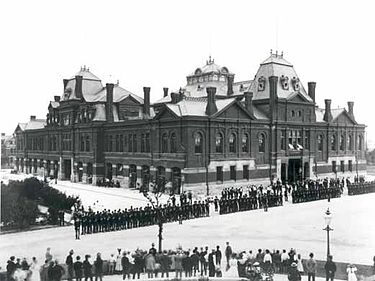
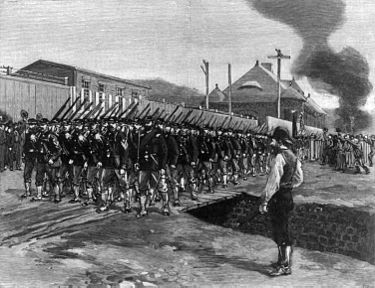
American Railway Union strikers (foreground) face the Illinois State Militia in Chicago. from Wikipedia

American Railway Union strikers (foreground) face the Illinois State Militia in Chicago.
from Wikipedia

By 1900, the American Railway Union had morphed into the Social Democratic Party (SDP). Reluctantly, Eugene Debs ran for president under its banner. The SDP evolved into the Socialist Party of America, with Debs as its standard bearer, gaining strength with each presidential election until 1912, by which time many of the reforms pushed for by the Populists and the Socialists had been co-opted by the Progressive wing of the Republican Party–its standard bearer being “Trust Buster” Theodore Roosevelt, known for his statement decrying the “malefactors of great wealth.”

Like Lincoln, Debs was a reluctant presidential candidate. He had also resigned from earlier positions with the Locomotive Firemen and the American Railway Union, thinking other men could better serve. When his resignation was refused by the membership, he tried to refuse the salary they offered, ending up negotiating for a lower figure.

Eugene Debs had his inconsistencies. He could be self-righteous and uncompromising. With a flare for the dramatic statement, he sometimes wrote things that would come back to haunt him. There was the “dynamite editorial” in 1885, and in 1900, his  support for a plan hatched by Washington state Governor John Rogers to colonize the entire state with laid-off American Railway Union workers and other socialist sympathizers. A movement, he predicted, that would likely bring on the intervention of the U.S. Army (as had happened in the Pullman strike), wherein “300,000 patriots” would then confront the federal troops at the Washington state borders. Governor Rogers found himself having to “tone down” such statements to the likes of the Spokane Spokesman-Review, the leading newspaper of eastern WashingtonAnd soon after, Debs began distancing himself from the “colonization” movement.

As with most of those who rise above the ordinary, Eugene Debs was both adored and vilified. But his words rang true for those who felt that neither the “mainstream” political parties nor labor organizations really represented them. His words deserve to live on.

I am not a labor leader. I don’t want you to follow me or anyone else. If you are looking for a Moses to lead you out of the capitalist wilderness you will stay right where you are. I would not lead you into this promised land if I could, because if I could lead you in, someone else would lead you out.

While there is a lower class I am of it, while there is a criminal class I am of it, while there is a soul in prison I am not free.
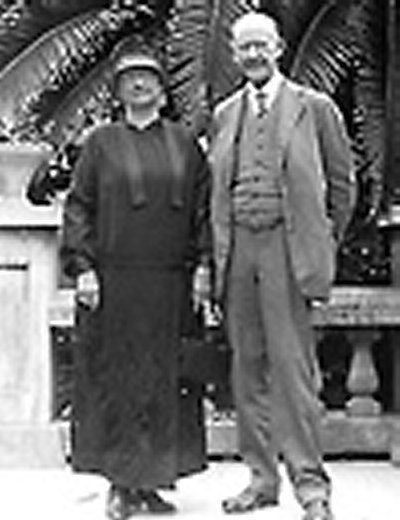
Eugene Debs with wife Kate Debs, 1926

Eugene Debs with wife Kate Debs, 1926  courtesy Eugene V. Debs Foundation

Eugene Debs died in 1926, five years after a presidential pardon released him from his second prison term.



Posted in history, labor, railroading, social protest | Tagged , , , , , , , , , , , , , , , , , , , , , | Leave a comment

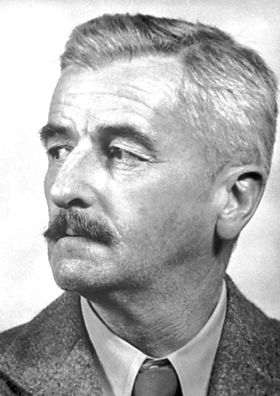
Did William Faulkner Really Say This?

William Faulkner in 1949

William Faulkner in 1949

In writing, you must kill all your darlings.

Not according to John Crowley, writer of fantasy, science fiction and mainstream fiction. I was happy to read in Crowley’s “Easy Chair” column, in the November 2014 issue of Harper’magazine, that the real credit–or discredit–for this statement goes to one Sir Arthur Quiller-Couch, who did make a similar pronouncement 100 years ago, lecturing in some British university. The “Easy Chair” column quotes the obscure Sir Quiller-Couchin in full: “Whenever you feel an impulse to perpetrate a piece of exceptionally fine writing, obey it–and delete it before sending your manuscript to the press. Murder your darlings.”

Since first hearing of that quote (whichever version), I’ve been disturbed by it. So it was a relief to find that neither Faulkner, nor Mark Twain nor Gustave Flaubert nor Earnest Hemingway (among others given the dubious credit), likely ever said or wrote such a thing. What’s more, on further reading of the Harper’s column I gleaned that John Crowley thinks the advice is rubbish.

John Crowley Author and writing instructor

John Crowley
Author and writing instructor

Such advice goes hand-in-hand with the equally trendy notion that one should write in an undisciplined manner, just spew it all out on screen or paper, for then he or she can engage in a feeding frenzy with highlighter and delete button.  John Crowley points out that this method has only been practicable since the invention of the word processor–without which it would require laborious multiple hand re-writing or re-typewriting .

Personally, I like to think and write down something I consider close to the end result being sought; and then do minimal editing. It’s gratifying to know I’m in good company with this method, as it had to have been (by necessity, before the word processor became commonplace) the way people wrote, up until the 1990s or so. And hand-in-hand with the new digital-age style of writing is the collaborative method of literary expression, encouraged by “creative writing” courses and groups, exacerbated by the rise of social media. Crowley points out–and for what it’s worth, I would agree–that for untold ages, until the dawn of our new century, writing has been a mostly solitary process.

If this sounds like the ramblings of a curmudgeon, so be it. Whether the flowery “stream of consciousness” of James Joyce, the majestic unadorned prose of Faulkner or Hemingway, the magnificently manic ramblings of Thomas Wolfe, or the evocation of place and time-period by “dean of Western writers” Wallace Stegner, I like pre-digital age fiction. What a tragedy it would have been had any of these writers succumbed to “murdering their darlings,”  throwing out their most lyrical prose, and allowing their works to be produced “by committee.”

Not that there isn’t a place for editing. But, in an ideal world (which seems to be slipping further away), editing is done by a person or entity that has a stake in the successful outcome of one’s work. Where would Thomas Wolfe have been without Maxwell Perkins?

Author photos from Wikipedia

Posted in history, self-publishing, social criticism, writing | Tagged , , , , , , , , , , , , , , , | 1 Comment

Look What They’ve Done To My Book!

Thomas Wolfe and his Manuscripts from Wikipedia

Thomas Wolfe and his Manuscripts
from Wikipedia

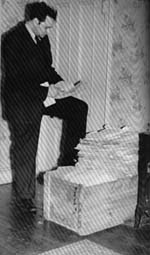
Thomas Wolfe, manically writing while standing, using the top of his icebox as a desk, tossing his manuscript pages into a nearby wooden packing crate, would not understand how my two novels got mangled when transformed into Kindle versions. I don’t understand the processes involved either. But he might have sympathized with the horror I felt on learning that these deformed renditions have been available to buyers for a number of days.

I take full blame. In a hurry to get out e-book versions, though admittedly a bit of a Luddite and not comfortable with the Digital Age, I uploaded the text files in PDF format, which Amazon did warn was not the preferred format. In my hurry–and glowing in a new satisfaction that I was mastering the process of e-book publication–I assumed there might be a few minor glitches which could be edited out. Also, I failed to preview the text files, there again trusting in the process. When belatedly I checked out the “look inside” previews on my Amazon author’s page, what came up was a run-on version for each book. No page differentiation or numbers, confused paragraph spacing, unreadable copyright and title pages, crammed-in image captions, and so forth. The gist of the story in each was readable, but were I a customer investigating the book, I’d be less-than-impressed. And I will never know–would rather not know–how many would-be readers, and buyers, I may have chased away.

Putting out Kindle versions is an idea that came to me lately, after looking at statistics of what what kind of remuneration self-publishers can expect from e-books as opposed to real paper-page books. I’ve also been hearing nothing but discouraging things about the state of “traditional” publishing these days. It seems that beginning authors are caught between a rock and a hard spot, with the potential to be crushed by forces too big, whether they be represented by the likes of Hachette, or of Amazon. We can expect being steamrolled over by the mega-publishers, run by people who care nothing about books or writing, only profit, who see promotion not as a mutual benefit but only as a negative post on the ledger sheet. Or we can at best expect–by going the self-publishing route, relying on e-books–to make little more than minimum wage.

I’m not writing just as a hobby. It is a passion, and I believe most of it is very good, and I aspire to make more than a poverty-level living at it. But as I wrote in a blog last winter (“Where Have You Gone, Maxwell Perkins?”), the challenges to becoming a successful author, with proper compensation, are approaching the insurmountable. That is, unless some gatekeeper decides your work is the next Harry Potter or 50 Shades of Grey.

Not about to give up, I shall unpublish the Kindle versions of Cinders Over The Junction and Beyond The Divide. And I’ll resolve to be more methodical if and when I decide to republish them as e-books. Meantime, they’re both available as bound books, with text of ink on turnable pages of paper. And they both have had excellent reviews, and one is an award finalist. And in whatever number of years or decades remaining (I’m just shy of 70), I’ll do my best to navigate the Brave New Worlds of digitalization and mega-publishing, seeking the recognition and compensation that I believe my books, and their sequels, deserve.

Other than time, or money, or peace-of-mind, what is there to loose?

Posted in self-publishing, writing | Tagged , , , , , , , | Leave a comment

Any Writers Who “Drive School Bus” Out There?


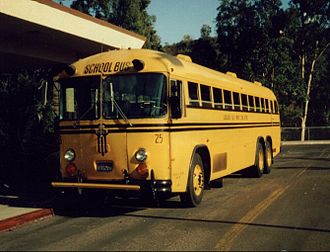
Crown Supercoach from Wikipedia

Crown Supercoach
from Wikipedia


The treasured summer vacation is winding down, as is the time-allotment for getting done all those tasks to be completed by Labor Day. Create e-book versions of Books 1 and 2; do a final proofreading of book 3; repair loose bricks and a crumbling cap on the chimney: replace rotting pickets and paint the fence; re-edit the manuscript for Book 4; have the woodshed stuffed with dry wood before the rains return in September–though it rained cats and dogs last night, nearly snuffing out the charcoal fire while cooking up our first treasured Puget Sound sockeye salmon of the season. (Drenching rain in the middle of August I take as a personal affront). And already there are the shortening evenings, just as the “back to school” ads proliferate.

Approaching 70 years of age, there’s something out-of-place yet heartwarming about again  experiencing summer, and the dreaded looming of approaching September, as any fifth-grader might. Being a school bus driver does that to you. It’s a job I took as a “retirement job,” its attractions being the part-time hours allowing more time for pursuing writing; and being less physically demanding than my job involving railroad track maintenance (though managing a woodlot helps to make up for that lack).

Not that school bus driving doesn’t have its demands–whether you drive one or two shifts a day, or work three, four, or six hour days. Navigating a 40-foot conveyance on both city streets and country roads while keeping a lid on the exuberance of 70 grade-schoolers and making sure they all get off, safely, at their right location–and keeping to a schedule. It’s not a job for everyone, retiree or otherwise. Those who do it, or have done it, know what I’m talking about.

So I’m thinking it might be fun to connect with writers–aspiring, self-or-traditionally published, of any age–who “drive school bus” as a day job and balance its demands with those of authorship. Do you crank out words between the am and pm shift? Are you counting the days to when you can hang up your keys and clock out for the last time and live off the proceeds of your creative mind? Does the bus driving sap you of energy that you would would prefer to pour out onto yellow pad or computer screen? What about treasured moments? Such as when the bus is emptied and you drive back to the barn alone in your thoughts or mental planning; or just enjoying the scenery.

A confession–I’m a novice at “blogging,” and don’t even like the term. I’ve been at it now for going on eight months and often feel it to be as big a distraction and chunk out of one’s time as a paying job–and no pay, of course. And the blog that’s based on a question is yet newer to me. But, all that aside, if anyone out there stumbles on this and feels they can relate to what I’m blathering about–yes, I’d love to hear from you!

Posted in nostalgia, school bus, writing | Tagged , , , , | 3 Comments

A Visit to the Home of the Future Socialist Leader– Part Two


May, 1894: Social activist Norah O’Hanlon Quinn, now married to former priest Daniel Quinn, accompanies him on the last leg of their trip out to the Midwest. Expecting to visit American Railway Union leader Eugene Debs and his wife Kate, they learn that Mr. Debs has been called out to the company town of Pullman, near Chicago, where workers at the sleeping-car manufacturer’s sprawling works are threatening a strike.

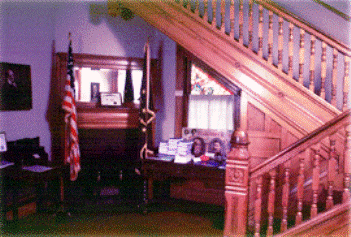
Foyer--home of Eugene and Kate Debs courtesy Eugene V. Debs Foundation

Foyer- Home of Eugene and Kate Debs
courtesy Eugene V. Debs Foundation

Excerpted from Chapter 24, Beyond the Divide–2014 finalist in the Readers’ Favorite book award contest.

Beyond The Divide is available from Village Books, Fairhaven (Wash., U.S.A.); and from Amazon

 * * *

Pouring a glassful of red wine, Kate Debs told the Quinns how relaxed she felt in their company, that she was sorry they would be leaving the next day. “In a way I’m the perfect wife for Gene,” she said. “He’s away so much. And myself, I’m a bit of a recluse. The company we normally have is his. But sometimes we have to fend people off, sometimes Gene comes back so spent, it’s all he can do to lie in bed and maybe do some paperwork. I’ve really never seen anything like it. The marvelous energy that the world sees, it simply vanishes.”

“I’ve heard,” Daniel said, “how he sometimes when on the road disappears into his hotel room, sometimes for days at a time.”

Kate’s eyes shone with amusement. “Yes, there have been times at conventions, when difficulties are brewing, that he will conveniently have a ‘nervous collapse.’ They are quite real, but, nonetheless I suspect that he has developed the ability to time them at his convenience.” She refilled her glass. “Lest you think that I sit here and on lonely evenings console myself with drink, I can truthfully states that weeks, sometimes months, pass without my touching a drop. In fact, I’ve been known to scold Mr. Debs for his excesses. Oddly, for such an energetic man, he can’t hold his liquor well and he hasn’t the heart to turn anyone down. Then, of course, there are the Jamey Riley visits, where the two of them like over-aged boys go out carousing—seeking what Mr. Riley calls ‘the fruit of the vineyard.’ ”

Both Daniel and Norah recognized the talkativeness an introverted person can engage in when feeling relaxed in trustful company. Norah only widened her eyes and nodded in encouragement as their hostess continued.

“It is a refuge I provide for Mr. Debs. A safe harbor where he can entertain or hide away, as he chooses. And be in comfort and surrounded by lovely things. It may be true he would be happy in a shack down by the yards, but I’m more inclined to see that as part of a myth…a myth building about my husband. He enjoys the nice things of life. And he deserves them!”

“I remember hearing about the boots,” Daniel said. “If his sooty boots were on the porch, he was home.”

Eugene Victor Debs courtesy Eugene V. Debs Foundation

Eugene Victor Debs
courtesy Eugene V. Debs Foundation

“Pshaw!” she said. “He wears fine polished shoes when he goes out, and has sufficient-enough tailored suits, for when it fits the occasion. If you’re firing an engine, you don’t wear a suit. If you’re meeting with powerful opponents, you don’t wear overalls. The ‘producing classes,’ he would say, are every bit the equal of the business and wealthy classes, and their representative need not present himself as an inferior.”

“The umbrella,” said Norah, “…in the hallway. There’s something poignant about it.”

“And I can tell you what that is….He has no need of it!” Noticing a fiery expression in Kate Debs’ eyes not seen earlier, Norah hoped she hadn’t inadvertently touched off a raw emotion in her hostess. Mrs. Debs continued. “He’ll go all day bareheaded in the rain if it’s to help someone. All he wants is an umbrella big enough to shelter the whole country! To cover the heads of the luckless…the dispossessed. They are his family!” She looked on the verge of crying. “That we ourselves are quite childless is obvious. I am medically incapable, you see, of providing him with his own family…”

“Now you mustn’t berate yourself,” soothed Norah. “That is not your fault.”

“But an operation could have fixed it. But my mother and stepfather thought the medical risks not worth it…. I could have had it done anyway, but Gene concurred with them. I know how he aches for children of his own, yet he downplayed it…saying I was all he needed and he wouldn’t have me face the risks.”

Daniel watched as she poured another glassful, mindful of how shy people often found in alcohol a vehicle for otherwise inhibited expression.

“And yet…here I am, day after day, sewing, housekeeping…night after night, sewing, reading; cooking and eating alone…. You see, he really has no family at our home here. I am mostly a disappointment. But he would never say so! His own family barely tolerates me…. His younger brother Theodore worships the ground Gene walks on…. He loves him for much the reasons I do…yet Theodore despises me.”

She was visibly crying now. “The press ridicules me, I suppose because I don’t go around wrapped in gingham and a poke bonnet.” Norah, seated next to her, moved closer and put an arm around the younger woman, now going into heaving sobs.

“This is not Gene’s home! His home is the world out there…. But there are times…times when we’re so happy, even just a few days ago. He’d been gone so long, and we were together again—relishing his Great Northern Railway victory…and then he gets called out to this Pullman thing! But, sometimes I…how selfish I must sound! And what an ungracious hostess I’m being—please forgive me…. Yet sometimes, I can’t help but resent that he’s out there comforting the dispossessed of the nation…but there’s no one here to comfort me!” Amid soothing murmurs, Norah provided her with a handkerchief. “Do forgive me…” Mrs. Debs said, trying to compose herself. “I’m being a selfish ninny…what must you think!” She continued to sob, leaning on Norah’s shoulder.

Daniel read well the signal in his wife’s eyes, the pointing nod. He understood he was given leave to quietly go upstairs, to the guest room or the library, that at the moment male presence was unneeded, perhaps an intrusion.

 * * *

Over a sumptuous breakfast cooked the next morning by Kate Debs, Daniel truthfully exclaimed it was the best he’d eaten since leaving home. Their hostess was her composed self, with no reference made to the previous evening. She said she worried over Mr. Debs’ predicament. On the brink of seeing the American Railway Union fulfill his lifelong dream of bringing together workingmen regardless of craft, involvement in the Pullman walkout could wreck the burgeoning movement. Yet she regarded the possibility of her husband’s life work going to ruin with a coolness befitting a reporter. Daniel Quinn concluded that however his own wife had comforted the distraught woman of the night before, it had done its work. Kate Debs was all efficiency in cooking and serving breakfast while keeping up a lively conversation over coffee. She thought it likely that at the upcoming A.R.U. convention in mid-June, the delegates would support a Pullman strike, moved more by emotion than by wise strategy, and that Mr. Debs would have no choice but to go along.

Kate (Metzel) Debs Courtesy Eugene V. Debs Foundation

Kate (Metzel) Debs           courtesy Eugene V. Debs Foundation

She continued to radiate a warmth toward her guests that didn’t let up, on the way to the depot, even as she stood on the platform, her waving handkerchief receding from view from the paired windows of the Pullman car.

Settled in the day seats of their section, Norah, with some consternation, opened the telegram from her son Bill she’d moments ago picked up at the ticket agent’s window.


Posted in history, labor, love, writing | Tagged , , , , , , , , | Leave a comment

A Visit to the Home of the Future Socialist Leader–Part One

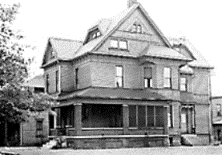
Home of Eugene and Kate Debs, in Terre Haute, Indiana courtesy Eugene V. Debs Foundation

Home of Eugene and Kate Debs, in Terre Haute, Indiana
courtesy Eugene V. Debs Foundation

May, 1894: Social activist Norah O’Hanlon Quinn, now married to former priest Daniel Quinn, accompanies him on the last leg of their trip out to the Midwest. Expecting to visit American Railway Union leader Eugene Debs and his wife Kate, they learn that Mr. Debs has been called out to the company town of Pullman, near Chicago, where workers at the sleeping-car manufacturer’s sprawling works are threatening a strike.

Excerpted from Chapter 24, Beyond the Divide–2014 finalist in the Readers’ Favorite book award contest.

Beyond The Divide is available from Village Books, Fairhaven (Wash., U.S.A.); and from Amazon


The second telegram was from Kate Debs. It informed them Mr. Debs was on his way to the troubles in Pullman and would, regrettably, be unable to welcome them to their home, but that she was still expecting the Quinns to arrive at Terre Haute on the 15th of May and to be her guests for a few days.

The news of Debs’ departure came as no surprise once they learned that at 10:30 a.m., the 11th of May, 3,000 Pullman workers put down their tools and walked off their jobs.
The day following the Quinn’s arrival at the Debs home, Norah penned a letter back to Riverport, New Jersey, to longtime family friend Kathleen Scanlon:

351 North 8th Street
Terre Haute, Indiana
May 16, 1894

Dearest Kathleen,

How are you, my sweet, and, I must of late confess, neglected friend? My guilt at thus far sending you nothing but picture postcards knows no bounds. So here I am attempting to make amends, by writing you a full-fledged letter, with accompanying hope that it reaches you before our own arrival home!

As I’m certain Mr. Scanlon keeps you, his lovely and uncomplaining wife, apprised of what’s going on in that often dreadful “man’s world,” of strikes, walkouts, lockouts, grievances and reprisals, I shall confine this missive to the pleasanter things that interest those of our sex whose responsibility it is to keep and maintain a place of beauty and sustenance, to give the strength to our men to daily face the world and its grim machinations (which they tend to create!).

With that said, I shall describe my first impression of the troubled town of Pullman, Illinois, which we toured last month on our way out to St. Paul. What first struck my eye, even more than the imposing buildings laid out so neatly, was the 3-acre lake as a centerpiece. Being a warm spring following a nasty winter, the azaleas were beginning to grace the park-like setting with their shimmering brilliance of crimson and pink, while overhead the crabapple and cherry blossoms showered a hint of white and pink mixed with new green. In beds circular and oblong, and bordering paths, tulips of every hue waved in the gentle breeze, sharing the clear fresh earth with the gentle-to-the-eye pastels of late-blooming narcissus.

Hard it was for me to resolve this emerging spring beauty, along with a town centered around architectural grandness, what with church, hotel and market, standing sentinel over blocks of handsome though rather uniform brick homes, knowing that not far from the surface there lurked a sense of despairing submission in its cowed inhabitants — even privation. In the masking of regimented suffering by red-brick architectural grace, I’m reminded much of the domed-magnificence of our New Jersey state prison so very visible from our own homes.

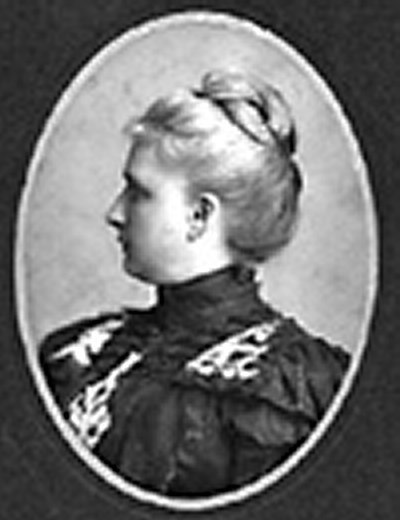
Kate Debs courtesy Eugene V. Debs Foundation

Kate (Metzel) Debs
courtesy Eugene V. Debs Foundation

Today, in a more cheerful setting, we are the guests of Mrs. Eugene Debs, known to those close to her as Kate. As I write this, Mr. Quinn and I are happily ensconced in the upstairs guest room, known as the Riley room for its frequent honored guest, the poet of “Little Orphan Annie” and “When the Frost is on the Pumpkin.” I face a most decorative though tonight unneeded green-tiled fireplace with carved-oak mantle. That I am overcome with unworthiness as I sit and write at the very desk frequented by James Whitcomb Riley goes without saying, though truth be told, I enjoy the waxy sentiment of his work but have never much admired it as real poetry.

James Whitcomb Riley from Wikipedia

James Whitcomb Riley
from Wikipedia

The house was designed and to a fair degree built by Mr. Debs himself. In its squarish, homey design, four rooms over four, topped by a profusion of gables and dormers, it is the essence of Eugene Debs, enlarged and made into wood. Sitting on a corner double lot, generous porches front the streets on two sides. The neighborhood is fairly well-to-do, though a far cry from the Summit Avenue of James Hill — or the Prairie Avenue of George Pullman. Mrs. Debs chose the lot, as she likewise decreed the size of the house — Mr. Debs, I’m certain, being contented enough with the 3-room flat they once rented, and were he needed only to please himself, would be at ease in a shack behind some railroad roundhouse. But Kate Debs — a bright, charming and overly-gracious hostess, by the way — brought some money into the marriage thanks to her Swiss stepfather, who established Terre Haute’s largest drug store, though she was born in humble circumstances. She, like you, Dearest, is very astute at living simply in order to make her money grow, her only ostentatiousness being in clothes and home décor. But in the décor, she must not be fully credited, or blamed, if, like me, you aspire to an unfashionable unadorned look. Upon their marriage nine years ago, the gifts from engine firemen and other railroad workers piled in daily to the depot express office, many from distant places and people Mr. Debs has no recollection of meeting personally. These wedding gifts soon overwhelmed the rented flat and many were put into storage — but at last, a home has been built for them and their recipients.

Eugene Debs courtesy Eugene V. Debs Foundation

Eugene Victor Debs
courtesy Eugene V. Debs Foundation

Arriving as we did in Terre Haute yesterday evening, Kate Debs greeted us at the depot, looking regal in a royal maroon plumed hat and tapestry-paneled suit of mauve, gold and brown. More than keeping up her end of the lively conversation in the hired hack, some blocks past the city center we came upon the corner house, where grew a sturdy shade tree destined to someday dominate the yard, along with boxes of petunias splashing purple and pink where the noon sun would hit, the porches partly shaded by morning glories twining through taught string stretched from railing to roof. Opening the figured-glass front door, the first thing Mrs. Debs pointed out was Mr. Debs’ forgotten umbrella, still standing folded in its rack. Ahead in the generous reception hall, a bronze-winged Mercury perched on the newel post, the evening light filtering dappled through the front door. Glancing upward, sunlight from the opposite direction illumed stained-glass roses and daisies on a window gracing the turn of the stairway.

Parlor, Debs Home Courtesy Eugene V. Debs Foundation

Parlor, Debs Home
Courtesy Eugene V. Debs Foundation

The parlor, my Kathleen, is sumptuous, reflecting in Mrs. Debs a taste equal to your own. Water-blue wallpaper, patterned with long white lilies, compliments the amber tiles of the fireplace. You would adore the crystal prisms hanging from the lampshades, not to mention the hanging Tiffany lamp with its green leaves and white lilies and bulrushes. As our hostess gave us a tour, she would light the gas fixtures, dispelling the oncoming darkness. There on the lamps, patterns of purple grapes and green leaves and enameled flowers shown to complement the pastoral wallpaper patterns and fine-grained varnished woodwork. The remaining rooms had fireplaces tiled with rain-washed blue. Mantels were of carved golden oak, except for the upstairs library, being of Honduran mahogany, the perfect pedestal for a French Rococo clock, one of many wedding gifts sent by the railroaders and for the first five years, confined to the 3-room flat. Kate pointed out a silver water carafe from the Kansas City lodge of the Brotherhood of Locomotive Firemen, a cut glass set from Boston, and — from the Brotherhood lodges of Chicago — a parlor set of polished mahogany, upholstered in blue, olive and old-gold plush. There were silver service sets, and a Persian jar for preserving rose petals. With eight rooms, there was now floorspace for the Oriental throw rugs and flowered Brussels carpets. There was now a high enough ceiling to hang the mother-of-pearl lamp with its pale-violet glass prisms. Ensconced in the library was the leather rocking chair, a gift from Mr. Debs’ local Vigo lodge of the Brotherhood. And from Mr. and Mrs. Robert Ingersoll had come a reproduction statue of Winged Victory.

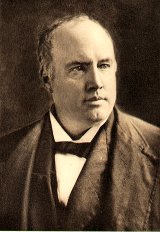
Robert G. Ingersoll from Wikipedia

Robert G. Ingersoll
from Wikipedia

And speaking of the Ingersolls, Mr. Quinn was a bit distressed he had missed a visit from them by only a few days, my husband always wanting to engage the man he so admired for his intellect and oratorical skill — to challenge him in a debate that our own Catholic faith, with some of the more literal interpretations and obscure dogmas cast aside, could stand up to the test of Reason better than Mr. Ingersoll’s loudly-touted Atheism. Mrs. Debs is especially fond of Mrs. Ingersoll, describing the pretty, petite woman always in brown to match her wren-brown hair as a contrast to her slow-moving ponderous husband Robert. She is a feminist Deist, you know, and claims that Eve provided the rib to create Adam, who then brought down ruin on “human” kind by tempting his wife to an apple!

And so, my dearest, I shall close off here, marveling that as I enter without reservations into Old Age, I have at last now journeyed half-way across the American continent; that we are guests in the house of Mr. and Mrs. Eugene Debs, having recently met the Archbishop of St. Paul, and Mr. James J. Hill; and that I place pen in drawer at the desk where doubtlessly “Jamey” Riley penned many a rusticated verse, his writing a demonstration of his own adage that “writing poetry is like giving birth to a rough-shod colt.”

So soon we shall be home, Kathleen, and perhaps we might resume our arm-in-arm walks about the quieter streets under protective canopy of maples and elms. The best to your dear Francis and your fine broths of sons Ed and Mike and Baby John, and to Jimmy in his far-flung adventures, and to bright, lively Mary — namesake of your dear-departed Mother, whom we all do so miss, and of the Mother of our Dear Savior, at whose feet we shall one day re-convene.

All Love,
Norah

Following dinner on the second evening, Mrs. Debs asked her guests if they would object should she pour herself a little wine as they retired to the parlor. She offered Daniel Quinn a cigar, laughingly quoting Robert Ingersoll, who would observe “it’s better to smoke in this life than the next.” Daniel declined, saying it wouldn’t be fitting to smoke in female-only company.

To be continued

References–Harpsong for a Radical, by Margurite Young;  Eugene Debs, Citizen and Socialist, by Nick Salvatore;  The Bending Cross, by Ray Ginger

Posted in history, labor, marriage, writing | Tagged , , , , , , , , , , | 2 Comments

The Homestead Steel Strike–Aftermath

Pennsylvania State Militia arrives to quell hostilities at Homestead, PA. drawn by Thure de Thulstrip from Wilipedia

Pennsylvania State Militia arrives to quell hostilities at Homestead, PA.
drawn by Thure de Thulstrip
from Wikipedia

July, 1892: Jimmy Scanlon, in Everett, Washington, has been following the distant events of the Homestead Steel strike.

Excerpted from Chapter 21Beyond the DivideAvailable from Village Books, Fairhaven (Wash., U.S.A.); and from Amazon

It’s rare for the law to be on the side of wage-earners, Jimmy thought, putting the pages aside. He’d long ago learned from his father and Daniel Quinn that the established newspapers usually got the gist of the story correct but often misstated or confused facts, and that a certain amount of lurid prose was needed to make the newspapers sellable and this in turn created competition among reporters to produce the most sensational versions. But he also had seen enough of human nature to know that normally-decent people could be reduced to savage actions, sometimes for understandable reasons.

Regarding the previous day’s events, perhaps the reporters found the plight of the captured, outnumbered Pinkertons more likely to draw sympathy among readers than that of the Homestead workers and their families, enraged though they were by rumors that the agents were brought in not just to guard but to scab. But weren’t most of the Pinkerton agents just average men trying to earn a living like anyone else? And certainly few had any idea of what they were getting into that day. There further lurked the sinister possibility that the day had gone as Henry Clay Frick had hoped, though he may have wished for more casualties among his hired Pinkertons in order to draw in state militia support and to discredit the workers.

Jimmy reasoned that whether or not the rumors of scabbing were true, the fact remained that the mill workers were locked out as part of a plan by plant manager Frick to break the union, and scabs would be brought in regardless. As for the reported happy ending for the Homestead people, Jimmy found it incredulous that a government entity would actually side with mill workers rather than mill owners.

The next day, July 8th, he read later dispatches form the Pittsburgh Press dated July 6th and from the New York Herald dated July 7th. The updated story had a very different ending from the Herald story of July 6th, which had left off with the Homesteaders jubilant over their “victory.”

A train did indeed arrive that night to take away the Pinkerton “prisoners,” who looked–as one reporter wrote–as forlorn and dejected as that of “the lowest immigrant laborers who had just arrived at Ellis Island.” Instead of being met by a fleet of “paddy” wagons to take the 300 Pinkertons to the Allegheny County Jail, around 2 a.m. the train was shunted to the Pennsylvania Railroad yards. From there the railroad obligingly provided another special train, arriving at 10 a.m. July 7th, to take the men to their homes and safety.
That same morning, Francis Lovejoy, Secretary for the Carnegie Steel Company, proclaimed the previous day’s events as the “deathblow” for the Amalgamated Association of Iron & Steel Workers union at Homestead and all other iron and steel works. “The Amalgamated people,” he said, “who committed these recent overt acts will probably find themselves in a very bad hole, for when the proper time arrives, a number of them will be arrested on a charge of murder, and I need scarcely say there will be no lack of evidence.” It was not the Pinkertons who would be indicted for murder. He continued:

“This outbreak settles the matter forever, and that is that the Homestead mill hereafter will be run non-union and the Carnegie company will never again recognize the Amalgamated Association nor any other labor organization. The Homestead trouble will doubtlessly also have the effect of influencing other mills heretofore union to become non-union thus to free their owners from the arbitrary dictates of labor unions.”

After reading the latest releases, Jimmy felt little elation in being correct in his hunch that the previous day’s reporting had ended incorrectly. He also felt thankful that so far he himself hadn’t been put in a position where he had to choose sides.

During the last week of July, Jimmy sacrificed some precious sleep to read of events following the Homestead steelworkers’ lockout. The New York Herald of July 11th had called it “more than a struggle between an employer and an employee. It has become a conflict between the citizens of Homestead and public authority…there can be but one course and one result—the enforcement of law and the restoration of order.” Management publications such as Iron Age and American Manufacturer were raising the specter of a “socialist uprising,” thankfully put in place by co-operation between the Carnegie management and the county and state governments.

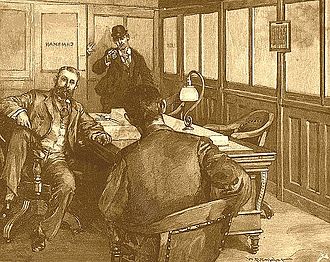
Jimmy was pondering that now it was the Homestead workers, not the Pinkertons, who were being indicted for murder, when no one knew who fired the first shots; and it was the Homesteaders who had received the greater number of casualties. Picking up the most recent paper, July 23rd, he read that Henry Clay Frick, the Carnegie Steel manager responsible for the plant lockout, had been shot and stabbed by anarchist Alexander Berkman—described as a “Russian Hebrew Nihilist”—in the company’s Pittsburgh offices. Helping Berkman carry out the attack was a 23-year-old Jewish-Lithuanian immigrant named Emma Goldman. While the Amalgamated Association of Iron & Steel Workers quickly condemned the action, the press was taking it a step further and comparing Berkman to John Wilkes Booth.

Alexander Berkman attempts to assassinate Henry Clay Frick drawn by W.P. Snyder for Harper's Weekly from Wikipedia

Anarchist Alexander Berkman attempts to assassinate Carnegie official Henry Clay Frick
drawn by W.P. Snyder for Harper’s Weekly
from Wikipedia

Many, however, did not see Henry Frick as Abraham Lincoln. For one thing, Frick survived. John McLuckie, burgess for the town of Homestead, stated, “This man Frick sent a lot of thugs and cut-throats to the peaceful village of Homestead…and they murdered my friends and fellow citizens.”

Henry Clay Frick from Wikipedia

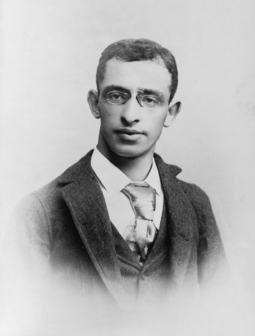
Henry Clay Frick
from Wikipedia

Alexander Berkman from Wikipedia

Alexander Berkman
from Wikipedia

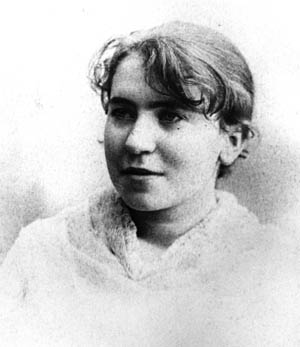
Emma Goldman from Wikipedia

Emma Goldman
from Wikipedia

A young state militiaman, W.C. Sams, on duty to help keep order in Homestead, when hearing of the assassination attempt, gave a rousing cheer for Berkman. Private Sams’ superior officer had him placed in the stockade and hung by his thumbs. Refusing to apologize, he passed out and was cut down after half an hour, then later drummed out of the service.

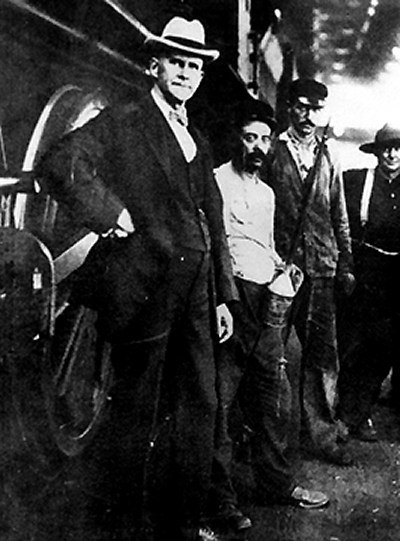
Not all sympathy for Berkman was local. Eugene Debs pronounced Alexander Berkman as a man of greater moral sensitivity than Henry Clay Frick

Eugene Debs meeting with railroad workers courtesy Eugene V. Debs Foundation

Eugene Debs meeting with railroad workers
courtesy Eugene V. Debs Foundation

Posted in history, labor, writing | Tagged , , , , , , , , , , , , | 1 Comment

The Homestead Steel Strike–Part Two

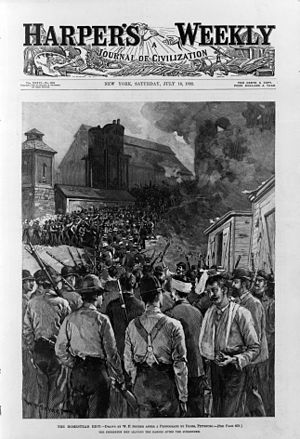
Cover of Harpers Weekly The Pinkertons file from the barge, after surrendering to the strikers

Cover of Harper’s Weekly
The Pinkertons file from the barge, after surrendering to the strikers

Gaining fame for ensuring the safety of President Lincoln on his inaugural trip to Washington D.C. back in 1861, by the 1890s The Pinkerton Detective Agency had evolved into a multifaceted organization chiefly known–and despised among the laboring classes–for providing armies of strikebreakers (“scabs”) during labor disputes, often hiring thugs off the streets.

July 6, 1892: At dawn, a first attempt to file ashore from the barges and take possession of Andrew Carnegie’s Homestead Steel Works began.

 Excerpted from Chapter 21, Beyond the DivideAvailable from Village Books, Fairhaven (Wash., U.S.A.); and from Amazon

As the hired agents in the barges slowly emerged on deck, the clearing dawn revealed to them an unexpected sight — throngs of townspeople on shore outnumbering them ten-to-one, brandishing weapons from clubs to Civil War muskets to high-powered rifles. The gangplank was lowered.

A lead group of Homestead defenders, the high-strung William Fay in front, followed by five more including Anthony Saulier, William Murray and Joseph Sotak — leader of the many East European immigrant steelworkers — advanced toward the first barge. As they moved with weapons cocked, Fay lay down prone at the foot of the gangplank.

In the inevitable confusion, two shots sounded, the first wounding Fay, the second Capt. Heinde. A battle raged for ten minutes, killing one Pinkerton and several Homesteaders, including Sotak, and wounding scores on both sides. O’Donnell, aided by Homestead burgess John McLuckie, attempted to keep order, as a lull set in and the sun rose and the fog lifted. Across the shore, the local Grand Army of the Republic veterans’ post had set up a 20-pound-cannon, trained on the barges.

A second attempt to disembark followed at 8 a.m. More shooting followed and four more Homestead workers fell.

Meanwhile, the tugboat Little Bill had departed, leaving the barges stranded. Trapped inside, many of the Pinkertons refused to fire. Some hid as best they could. When the G.A.R. cannon from across the river began to fire, total panic set in. Close to 11 a.m. the Little Bill returned in an attempt to rescue the barges but was repulsed by shore-side fire, leaving the Pinkertons again stranded.

Next the Homesteaders sent a raft of burning oil barrels floating toward one of the barges, intending to set it afire. Soon, a railroad flatcar — similarly loaded and blazing — careened down the tracks out onto the wharf, at the end of which sat the barges. The raft failed to set the large-timbered barge ablaze and the flatcar rolled to a stop before reaching the end, the attempts succeeding only in further increasing terror among the hapless agents. As the shots continued, another Pinkerton fell, Thomas J. Connors, shot while cowering under improvised cover. His agonizing death-bleed led to the raising of a white flag from the barge, only to be immediately shot down.

To observers, it appeared the Pinkertons were being sacrificed by Henry Clay Frick to justify calling out the Pennsylvania State Militia. No help was seen coming from the Allegheny County Sheriff’s department. By 4 p.m., with reports that Sheriff McCleary was planning a rescue of the Pinkertons, 5,000 men from neighboring mill towns had filtered in to reinforce the Homesteaders. Telegrams of support and congratulations poured in from labor organizations throughout the nation. Meantime, a contingent of national labor leaders, who had arrived at Homestead to persuade the workers to peacefully allow McCleary and his deputies to remove the Pinkertons, were ignored or shouted down.
By 5 p.m. another white flag arose from the barge Iron Mountain, following another attempt to set it afire and the blowing off of a few dynamite sticks — again causing more terror than real damage. O’Donnell and the Workers’ Advisory Committee had meanwhile come to an agreement with their fellow mill workers to accept surrender by the Pinkertons and hold them until they could officially be arrested on murder charges.

When the Pinkerton agents, now prisoners of the citizens of Homestead, were led off the barges, they were made to pass through a “gauntlet” along the beach, made up of Homestead citizens on either side in a line 600 yards long. According to a Pittsburgh Press reporter:

As the Pinkertons neared the top of the bank, they were helped along with kicks and cuffs. One man received a slap from a woman and attempted to strike back. He was at once hit on the head with a stick and blood flowed freely. Other women punched the fellows in the ribs and belabored them with switches. The Pinkertons followed each other closely. Many of them were bare-headed, others well-dressed, but most of them were tough-looking. No mercy was shown them .… The men … were punched by every man that could get a lick at them. The Hungarians were particularly vicious and belted the men right and left. They were knocked on the head and struck in the face. The men plunged wildly onward, begging for the mercy which they received not. No distinction was made. They were hit on the heads with hand-billies and clubs and sticks and stricken to the ground. Onward they plunged, bleeding and dazed.

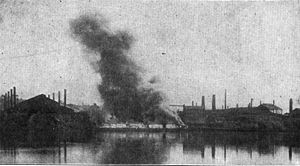
The sorry procession continued toward the mill. Hugh O’Donnell and some of the other Advisory Committee men made efforts to restrain their neighbors and fellow workers. Women and boys stormed the now-emptied barges and, stripping them of all useful domestic objects, set the vessels afire.

The barges set afire from Wikipedia

The barges set afire
from Wikipedia

Continued the Press:

The delight of the onlookers at this finale to the tragic events of the day knew no bounds. They cheered, clapped their hands and even danced with glee while the dry wood blazed and crackled, and two huge columns of smoke rose lazily toward the sky and formed clouds overhead. Not until the vessels had burned to the surface of the water and the last hissing embers disappeared beneath the placid bosom of the Monongahela did the enthusiasm abate.

As the men were paraded through the mill, crowds of mainly women and children formed at the entrance.

Many women and children in one confused mass surged rapidly toward the works. Many young women who were mild and gentle-looking stood in their gateways and cried to the men as they rushed by: “Give it to the blacksheep*, kill them all!”

Added a reporter from the New York Herald:

Well-bred and well-dressed women stood on front steps and laughed aloud at the sight of the miserable creatures staggering along the sod. … The thirst for blood had possessed these women, too, as surely as it ever did the Roman maids and matrons of the Coliseum, as there they stood in their doorways and laughed at sights which on any other day they would have fainted.

Near the Homestead Opera House, suitcases were snatched from a few of the agents who still kept any belongings and were thrown open as personal items, including underwear, were tossed in the air.

John McLuckie and Hugh O’Donnell managed to bring a semblance of order by 6:15 p.m., by which time the prisoners were secured to await the official train on which Sheriff McCleary would be aboard to arrest the Pinkertons on charges of murder and return with them to Pittsburgh, to the Alleghany County Jail. According to the New York Herald, by 11 p.m. in Homestead, the steelworkers were “jubilant over this official action,” which “places law on their side.”

*an epithet for scabs–strikebreakers

_______________________

It’s rare for the law to be on the side of wage-earners, Jimmy thought, putting the newspaper pages aside. He’d long ago learned from his father and Daniel Quinn that the established papers usually got the gist of the story correct but often misstated or confused facts, and that a certain amount of lurid prose was needed to make the newspapers sellable and this in turn created competition among reporters to produce the most sensational versions. But he also had seen enough of human nature to know that normally-decent people could be reduced to savage actions, sometimes for understandable reasons.

To be continued

Posted in history, labor, social protest, writing | Tagged , , , , , , , , , | Leave a comment

The Homestead Steel Strike– Part One

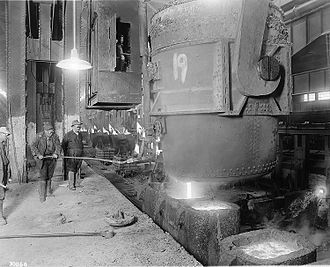
Molten steel from Bessemer converter filling mold at Homestead Steel Works from Wikipedia

Molten steel from crucible filling molds at Homestead Steel Works
from Wikipedia

July 7th, 1892: From various parts of the country comes the news of festering labor unrest, as workers feel left out of the prosperity issuing from new industrial technologies and rising productivity.

Jimmy Scanlon is holed up in Everett, Washington, waiting for the start of construction on the last link of the Great Northern Railway to Puget Sound.

 Excerpted from Chapter 21, Beyond the Divide–Available from Village Books, Fairhaven (Wash., U.S.A.); and from Amazon

In a wooden cell of a room near Nelson’s Saloon, in one of scores of buildings hurriedly constructed between still raw stumps, Jimmy read a letter from home of the birth of his newest brother, John—a large, placid slow-moving baby, quite opposite of Mary, now five, an active headstrong girl who sometimes defied her mother with temper tantrums.

On the last page of his father’s letter, Jimmy read of the darkening clouds over Andrew Carnegie’s sprawling Homestead, Pennsylvania, steel works outside of Pittsburgh. The Amalgamated Association of Iron & Steel Workers, one of America’s strongest trade unions, had been promised wage increases for their hot, dangerous work, much of it highly skilled. Thanks to the McKinley tariff, rendering imported steel and its finished products such as rails prohibitively expensive, profits for American steelmakers were soaring. Desirous of a reputation for being a humanitarian and friend of labor, Carnegie had lobbied for passage of the tariff in Congress, stressing that increased profits to steel companies would allow for the raising of wages.


Andrew Carnegie from Wikipedia

Andrew Carnegie
from Wikipedia

Carnegie’s plant manager, Henry Clay Frick, proclaimed no such fine sentiments and was virtually in charge of the contract negotiations while Carnegie was vacationing in his native Scotland. For Frick, who saw workers—especially organized workers—as only a drain on company profits, the question was not about increasing wages, or even leaving them as is, but about cutting them. If this led to labor strife, an opportunity would be present to destroy the union. Not surprisingly, negotiations reached a deadlock. Frick then directed to surround the plant with a barbed-wire-topped stockade fence, complete with gun holes and tower-mounted searchlights. To enforce his anticipated “lockout” he was reported to be ordering in an army of Pinkerton guards.

Henry Clay Frick from Wikipedia

Henry Clay Frick
from Wikipedia

Jimmy’s reading of his father’s letter and description began to rekindle an interest in the outside world. Over the past year he had barely looked at a newspaper.
At one time he’d studied the basics of steelmaking, learning that the industry had a tradition of strong worker organization going back to the days when wrought iron, the predecessor of industrial steel, was made under the watchful eye of “puddlers,” men possessing skill and training rare enough that they could set many of their own demands.

By the 1850’s, with the expanded development of railroads and other industry creating a demand for wrought iron at an accelerating pace, the time was ripe for the replacement of wrought iron by mass-produced steel. The newly developed Bessemer process, where molten iron was poured into egg-shaped vessels, then charged with pressurized air, produced steel in quantity using less-skilled labor. After the Civil War, the new open-hearth process further improved the efficiency of steelmaking, leading to the rise of gargantuan mills adjacent to cities such as Pittsburgh and Bethlehem, Pennsylvania, and Gary, Indiana. While virtual armies of semi-skilled workers, many of them immigrants, replaced the highly skilled iron puddlers, nevertheless a tradition of strong worker organization remained in the industry, at direct odds with the goals of the mill owners and managers who saw their unionized workforce as an impediment to maximized profits.

Burdened with another extended 4th of July holiday, the memory of the year’s previous celebration spent up on Bellingham Bay still festering, Jimmy was grateful for the mental diversion created by following the current developments at Homestead, Pennsylvania. On July 7th, not yet called to work, walking down the dusty swath recently named Hewitt Avenue, he stopped at a well-stocked newsstand and picked up what papers he could that contained wire dispatches from Eastern papers—the New York Herald, the New York Sun and the Pittsburgh Press. Taking them back to his room, he pieced together the happenings of that previous day in Pennsylvania.

____________

Well before dawn the tugboat Little Bill crept up the Monongahela River pushing two barges, the Iron Mountain and the Monongahela, with a combined load of 300 well-armed Pinkerton agents and cases of provisions and ammunition. On shore, the Worker’s Advisory Committee, led by a plate-mill operator named Hugh O’Donnell, was attempting to keep order in the town of Homestead, where 3,800 of the locked-out steel workers were amassing on the riverbank. To O’Donnell’s distress, a barrier reaching into the water had been breached by some of the townsmen.

The rumor ran through the crowd that the Pinkertons were actually sent as scabs, not just to enforce the lockout. As the barges were being beached, hundreds, including women and girls — some carrying both guns and babies — broke through the breach and confronted the first barge, the Iron Mountain. “Let me at them!” shrieked a Mrs. Finch, brandishing a billy club, described as a “white-haired old ‘beldam’ who had seen 40 strikes in her long life.” Shouts of “go back or we’ll not answer for your lives,” or “Don’t come on land or we’ll brain you!” issued from the shore, from men and women alike. Hugh O’Donnell knew many of his fellow workers and townspeople were well-armed, and ordered them not to open fire. Moving to the front, he made a plea to the Pinkertons beginning to file out on deck from inside the barges.

“On behalf of 5,000 men, I beg of you to leave here at once. I don’t know who you are nor from whence you came, but I do know that you have no business here, and if you remain there will be more bloodshed. We, the workers in these mills, are peaceably inclined. We have not damaged any property, and we do not intend to. If you will send a committee with us, we will take them through the works, carefully explain to them the details of the trouble, and promise them a safe return to their boats. But in the name of God and humanity, don’t attempt to land! Don’t attempt to enter these works by force!”

Frederick H. Heinde, captain of the Pinkerton detachment, replied from the barge deck. “We were sent here to take possession of this property and guard it for this company. … We don’t wish to shed blood, but … if you men don’t withdraw we will mow every one of you down and enter in spite of you. You had better disperse, or land we will!”

“I have no more to say,” O’Donnell shouted back. “Before you enter these mills, you will trample over the dead bodies of 3,000 honest workingmen!”

To be continued

 Reference–The Labor Movement in American History, by Conrad R. Stein


Posted in history, labor, writing | Tagged , , , , , , , , , , , , , | Leave a comment

Panic on the Farm– Part Three

Farmhouse, 1890s

1890’s-era farmhouse

Fall 1894: Melissa Davis is absent as Jimmy Scanlon helps Curt and his sons finish up with the last of the harvest on the Davis farm.

Excerpted from Chapter 26, Beyond the Divide–Available from Village Books, Fairhaven (Wash., U.S.A.); and from Amazon

The two boys now took over most of the milking duties, Jimmy having charge of the henhouse, and the more satisfying grooming and harnessing of the horses. Curt Davis continued his exclusive domain over the hog yard.

An evening after a bachelor style dinner, he invited Jimmy to see his rifles and shotguns. Cleaning and oiling an especially prized piece, Curt told Jimmy how he looked forward, once the corn was in and his wife returned, to bagging a deer, maybe an elk, how he would trudge several days through the nearby hills, rain and all, carefree knowing the haymow and corn cribs were full, as were the root cellar and granary, the woodsheds bulging, a supplemental load of coal in the cellar bin, how he normally loved to hunt alone, but that Jimmy could accompany him if he liked. “Or,” he added, the face behind the thick red-brown beard impassive as ever, “you might want to stay here and keep the Mrs. company. ‘Course, I can’t keep you on all winter–not enough cash for a hired man all year during theses times. But I can keep you busy and fed into November.”

Chopping off ears and tossing them into a waiting cart, later cutting down whole plants and bundling them into shocks, Jimmy kept his distance from Davis’ flailing though accurately applied corn knife. Trying to keep up, a story crept in from the back of his mind, though he’d long since forgotten where he’d heard it. It concerned a farmer who suspected his wife of unfaithfulness and one day chopped her up with a corn knife and fed her to his pigs, which in turn were butchered for human consumption. Suspicion by neighbors led authorities to dig up the hog yard, wherein they found human bones.

Watching the expertly wielded knife, knowing of Curt Davis’ sole overseeing of the hog shed and yard, the now two-week absence of Melissa Davis, Jimmy during the long hours of chopping and bundling chose to think lighter thoughts, to not entertain images of a story that likely had no basis in real life.

With the onset of hog butchering, Jimmy and the two boys were brought in to help. Beginning with a well-aimed gunshot to a fattened-up victim obliviously snuffling about, the carcass then shuddering on the ground before the nerves finally expired, Jimmy was familiar enough with the routine of scalding, scraping, cutting, cleaning, then the smoking or grinding into sausage. As with everything else on the farm, though, it was on a larger scale than what he’d done in his boyhood.

On a Saturday early-afternoon dinner, Curt Davis personally tended the kitchen range fire as a fresh butt roast sizzled in the oven, the first of the season’s pork to be sampled. White linen covered the table instead of the usual oil cloth that sufficed when Melissa absent. When done, he set the roast on a platter, then placed it on the table next to steaming bowls of potatoes, gravy, and the last of the fresh string beans, summer squash and sweet corn. Jimmy puzzled over Ely’s and Nathan’s absence for so fine a feast, but broached no question as Curt urged him to sit down and, handing him a well-sharpened carving knife, told him he’d have the honor of cutting and sampling the first slice.

“I couldn’t have done this without you, Jimmy boy,” the farmer said, who rarely called him, or anyone, by name. “I raised and butchered the most and the fattest porkers ever. I could trust you to handle lots of other things, so they got all my attention…and I had plenty to feed them.” Obediently slicing through the textured, flesh colored meat, panic mixed with a sudden nausea set in as Jimmy breathed in the steamy aroma, any earlier anticipation and hunger forgotten. He put down the knife and ran out the kitchen door and wretched off the back stoop. His stomach emptied, he collected his nerve for a sprint away from the house, thinking his flight might be cut short by the crack of a well-aimed rifle from the kitchen doorway. But a meaty hand placed on his shoulder stopped him and he turned around and saw behind Curt Davis’ beard no sneer of malice, no stony-eyed gleam of righteous vengeance, only a surprised expression turning to a look of concern almost tender.

“Here, here, boy, get aholt o’ yourself! I never seen an attack of the grippe come on so sudden. You’re still a shade of green. Here, I’ll walk you back to your cabin. Just lie down the rest of the day if you need to…. We’ll save you some of the dinner…when you’re feeling better. I never got around to telling you. Got a wire last night from Mrs. Davis, she’s coming in today–boys are picking her up now at the depot–should’ve been back by now, guess the train’s late. Fixed a special dinner for the occasion, thought I’d let you be first to sample it…seein’s how no one else was here yet.”

Laying on the iron bed, Jimmy looked out the 4-pane window as Curt Davis ambled back to the main house. Of course the taciturn farmer hadn’t told him of Melissa’s return. He wasn’t one to waste words on talk unless it was of direct concern to the recipient. Likewise it hadn’t occurred to Davis to mention that the fine dinner being prepared was to honor the early return of his wife.

As the afternoon turned golden, he felt he could neither move nor sleep, not knowing whether he was hungry or sick, if his life was in danger form a vengeful husband playing him like a cornered mouse or a hooked fish, or whether the big man was incapable of suspecting any wrongdoing on the part of his wife and their capable hired man. Jimmy stirred as he heard the return of the family buggy and the ebullient voice of Melissa Davis, a few words from the boys, fewer from the husband, the slamming of screen doors. He continued to lay near-motionless on the bed, watching the sunset. Speculating that the guileless Curt Davis was beyond harboring suspicion, but deciding not to wait to find out, he made up his bundle and quickly packed his grip. Thinking it best to not act too much the guilty party, he summoned his courage and walked back to the house, where Melissa gave him a short hug and asked if he was feeling better. He announced he would be leaving the following morning, saying he realized they were cash-poor and that the worst of the work was done and he didn’t wish to stay around as a recipient of their charitable kindness.

Davis lumbered from his rocker to a desk and opened a drawer, Jimmy thinking for a frozen instant he might be pulling out a small handgun. Instead it was a thin roll of dollar bills, to settle up on wages. When Melissa insisted on heating leftover pork, gravy and potatoes for him, he found his appetite had returned. She said he could ride with them into town to church in the morning. From there he could take his pick of trains running in all four directions.

As he parted from the family that morning, even the boys smiling and seeming sad to see him leave, in the back of Jimmy’s mind were boyhood sermons by Father Quinn highlighting the wages of sin. As Curt Davis pumped his hand and wished him well, it hit him that this most decent of men would find it unfathomable what’d been going on behind his back. Jimmy looked for a hint of a tear on Melissa’s face but was met by only a bright smile betraying nothing.


Posted in farming, history, writing | Tagged , , | Leave a comment