Panic on the Farm- Part Two

cooper.2-150x150

Late Summer, 1894: Jimmy Scanlon falls into the routine of working as hired-man on the Davis farm, a few miles east of Everett, Washington.

Excerpted from Chapter 26, Beyond the Divide–Available from Village Books, Fairhaven (Wash., U.S.A.); and from Amazon.

Curt Davis took special pride in his pigs, from farrowing to final butchering and smoking, his hams and bacons always a source for cash or barter. Jimmy and Melissa were left alone to milk the cows, to strain and separate the milk and fill the cream cans to be picked up before dawn at the depot. Unused to milking more than one cow twice per day, Jimmy’s fingers and wrists would begin to ache toward the end of the late-afternoon milking. Grabbing a clean bucket and re-setting the stool, he and Melissa moved from stanchion to stanchion. But the patient Guernseys, clean from their summer pasture, he found a pleasure to look at in their splotched white and gold…. Often she would sing, keeping a rhythm with the splat! splat! into the bucket, Jimmy pausing to admire the workings of her creamy arms, bared to the shoulders on the hot afternoons. Then she might look up and over at him, smiling with her eyes as she continued her song.

He was beginning to feel himself caught in a bucolic novel as they would exchange furtive glances, or hurriedly set up clandestine meetings, adding comedy to pleasure, heightened by the thrill of danger as they stole moments in haymow or secluded stretch of field along the riverbank, shielded by tall waving stands of wild grass.

Over meals in the commodious kitchen, Melissa enjoyed airing her views as husband Curt’s reddish beard moved up and down in contented chewing. There being no other women or girls in the house, the boys Ely and Nathan, like their father seeing the supper table more as a place for eating than for talking, Melissa was resigned to her role as solo conversationalist, contented with a nod or satisfied grunt or an occasional comment on the food, usually favorable. Curt Davis openly discouraged any table talk having to do with business or operation of the farm, saying there were plenty of other occasions for such, but had no objection to his wife airing matters of politics, including her own outspoken opinions, with which he mostly agreed. Daily she would find time to read the paper, usually in a lull between afternoon tasks and preparation for supper, or before going to bed.

“This Pullman mess,” she said, as Nathan, the younger boy, scooped out a second helping of potatoes, “It’s destroyed any chance for the Democrats in ’96. Most of the country’s up in arms about Grover Cleveland sending the troops into Chicago…. The contest will be between the Republicans and the Populists.”

Among her regular readings now was the Snohomish Sun, edited by John W. Frame, a man of Populist views who kept a keen spectator’s eye on the misfortunes befalling the nearby city of Everett. With her husband usually first to bed, Melissa normally read Frame’s comments alone.

With Henry Hewitt and his Everett Land Company now indebted to Rockefeller, a wave of helplessness settled over the area as reports surfaced of Rockefeller’s anger over what was turning out to be the worthlessness of the assets he’d taken as collateral. The gold mine at Monte Cristo had been “seeded.” The mine and its connecting railroad from Snohomish would likely be foreclosed and liquidated, as would much of Everett proper. As a Populist, Frame pointed out the folly of the people turning down by ballot the opportunity to purchase the city water and electrical systems and street railway at bargain prices, the chance lost to place them into municipal rather than private ownership.

Wherever Rockefeller turned he saw fraud and mismanagement and non-performing assets. Most ominous to Everett business people and residents was the belief, based on fact, that John D. Rockefeller never lost money. When the day of reckoning would come, when his dreaded foreclosures and liquidations occurred, the suffering wouldn’t be his to bear. But Editor J.W. Frame had other targets of scorn and ridicule besides the local “movers and shakers” who had ransomed their city of such promise to New York capitalists.

“Listen to this!” Melissa would say to Jimmy, sitting across from her in the parlor. He’d been made to feel free to spend evenings with the family, who except for her would be in bed well before nine o’clock. Giggling, she read parts of another editorial by John Frame. “He says the Good Citizens’ League should not only drive prostitutes from town, but ‘respectable’ ladies who spend their nights playing ‘cross-legged whist with amorous bank clerks.’ ” Her favorite editorial warned that “…unless the preachers of Everett cease their preaching for John D. Rockefeller’s sake and do a little more for Christ’s sake, the kingdom of Heaven will never be established on this sandpit.”

The Davis’ were Episcopalians and so Melissa, whatever guilt she may have felt regarding her liaison with Jimmy, wasn’t burdened with going to Confession. Being away from home, Jimmy found it easy to avoid church and the sacraments altogether, aided by his leaning toward atheism. The Davis family made no public show of religion, Curt more likely to get riled over such issues as the exploitation of the farmers by the railroads and the bigotry of the American Protective Association, the “Know Nothings,” which sadly, he said, had infiltrated the Grange, along with the Populist movement in Washington State. While he couldn’t fully grasp the Catholic Church with its “Latin mumbo-jumbo rituals,” as he said, and its allegiance to a city-state in Rome, nevertheless he thought discrimination against people because of their religion was a stupidity unworthy of the growing People’s Party. Melissa claimed he’d made himself unwelcome at social gatherings by stating that he respected Jews more than many of his fellow “so-called Christians;” though she added that he hated social gatherings anyway.

In one of Davis’ rare talkative spells, he threw out some numbers, probably gleaned from the columns and editorials of J.W. Frame: The American Protective Association, the “Know Nothings,” dominated the school boards of Seattle, Spokane and Tacoma. Thanks to an A.P.A. mayor, no city jobs in Spokane went to Catholics. Closer to home, they had caused the shutdown of the long-running Catholic school on the Tulalip Indian reservation

“One sixth of the population of Seattle is Italian,” Davis stated. “And the Scandinavians out here from Wisconsin, Illinois and Minnesota can’t abide by so many ‘foreigners’ in their midst. Ha! It’s just one group of foreigners prejudiced against another.”

“And are you bigoted against the ‘Squareheads?’” Melissa asked, throwing a little smile toward Jimmy, as though he were part of a conspiracy to “get his goat.”

But Curt Davis was not easily baited or angered, so he ignored the remark and continued, pointing out that the A.P.A. held a majority in the Washington state legislature, and that a leading “Apa-ist” represented their state in the U.S. Senate.

The only way to anger her husband, Melissa told Jimmy after Davis had left the room, was by mentioning the rates that the Northern Pacific was charging to ship his produce the 30 miles to Seattle.


When the feed corn was ready for harvest, Melissa took the train back to Ohio to help her aging parents for two or three weeks. The boys were plowing up the now harvested, richly manured truck gardens, next spring to be seeded in oats. The weediest pastures would be well manured over the winter, then come spring be plowed up, some for truck gardens and some for feed corn.

The farm being less than ten years old, there was only a small amount of fruit to harvest. “Keeper” potatoes were stored in the cellar and Melissa had shelves filled with Mason jars of preserved vegetables.

Working alone with Davis much of the time, Jimmy found his stolid company and unruffled overseeing easy enough. At times he did think his employer a bit obsessive about hazards.  He first noticed it in August in the dusty rich-smelling gloom of the haymow as they were putting away the second cutting. Looking at the four hooks of the clattering hay forks overhead, dangling from the roof peak trolley like some giant metallic spider, Curt had pointed out how a caught suspender or overall strap might get one lifted and dragged the length of the barn and set back down on the waiting wagon being unloaded under the pointed roof peak overhang. Or if his son Ely, working the horse out on the ground controlling the travel of the forks, were careless or inattentive with relayed signals, all manner of things could happen. The hay loader towed behind the wagon had hazards of its own, as did the spring-toothed dump rake, as did being in confined spaces with animals many times your size. Jimmy began to wonder whether it was just to prevent injury that Davis so graphically pointed out how a man might be lacerated or maimed or crushed, or whether the farmer had an unwholesome fascination for injury and possible death.
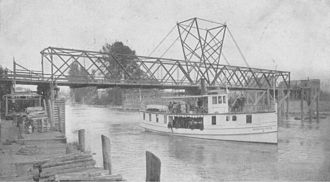
Posted in farming, history, labor, writing | Tagged , , , , , , , , , , , | Leave a comment

Panic on the Farm- Part One


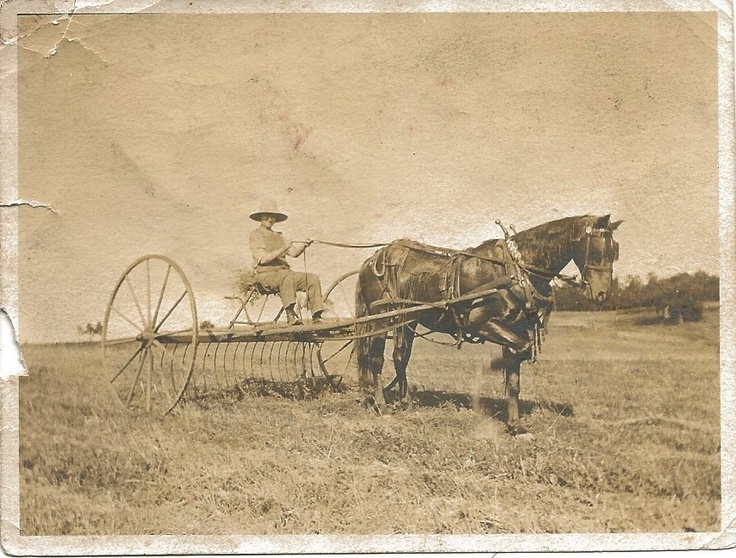
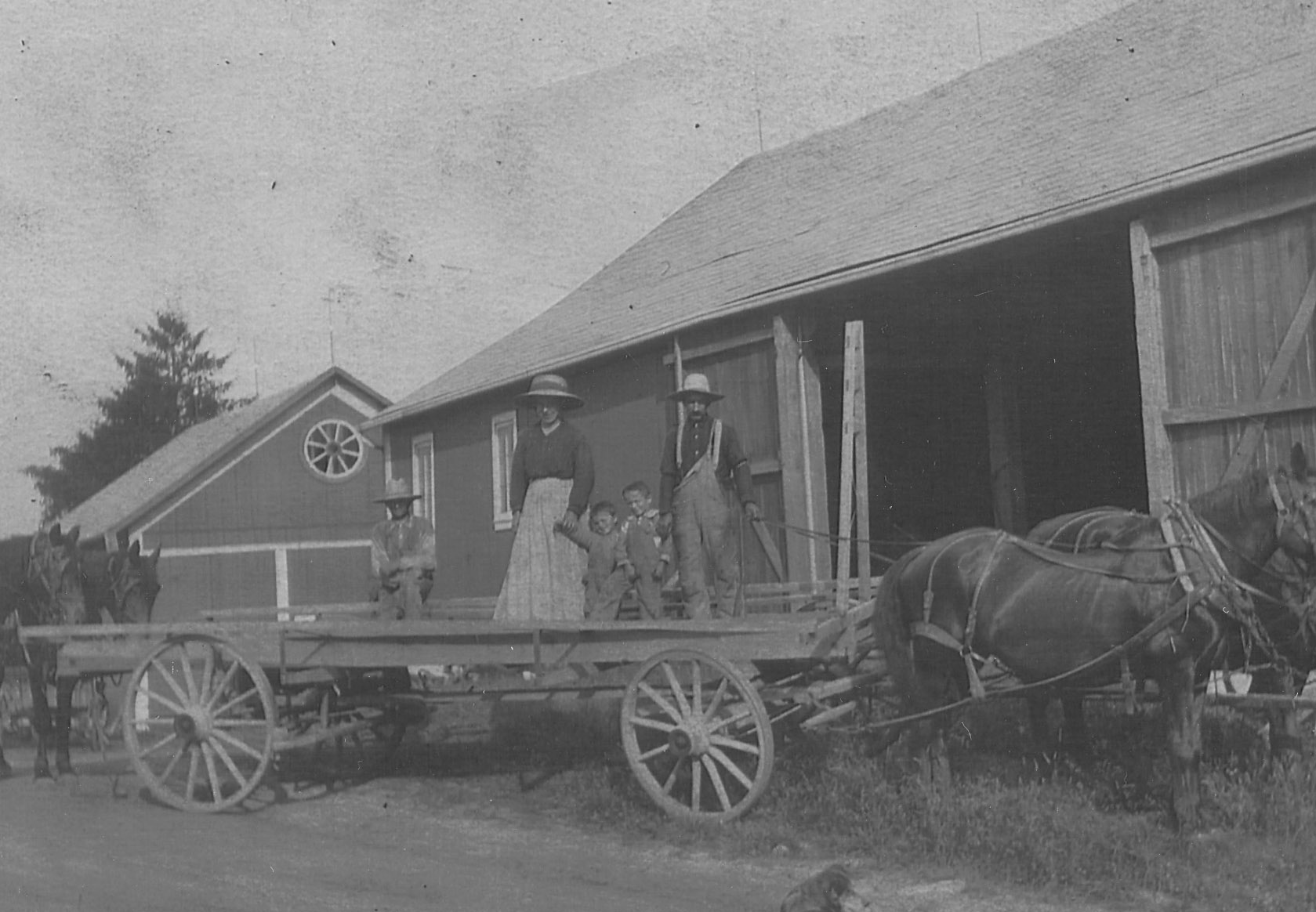
Farm family on hay wagon. Late 19th, early 20th Century.

Farm family on hay wagon. Late 19th, early 20th Century.

Summer 1894: During the two years following his ride into Everett, picked up by an accommodating farm couple, Jimmy had run into the farm wife on a train–finally learning her and husband’s names. In spring of 1894, the nation fell into its most severe economic collapse to date. Brought on by Wall Street speculation and over-valuing of railroad stocks, the working classes saw no upcoming relief from privation stemming from continued wage-slashing and unemployment.

Excerpted from Chapter 26, Beyond the Divide–Available from Village Books, Fairhaven (Wash., U.S.A.); and from Amazon.

There was little wage-earning work available for Jimmy Scanlon the summer of 1894 in Everett, Washington. The saw and shingle mills weren’t hiring. The nail factory, the paper mill, the barge works and shipyard–all were struggling to avoid shutting down. To the young city it was a cruel irony that the long-sought entry of the Great Northern Railway just a year prior coincided not with prosperity, but with a nationwide financial panic leading to an ongoing depression.

The Everett Land Company was forced into indebtedness, issuing bonds at 8% interest to pay off its considerable remaining debts. The story gained circulation that John D. Rockefeller had bought most of the bonds and that the Everett Land Company was unable to meet even the 8% interest payments; that an increasingly angry Rockefeller was threatening to liquidate assets vital to the city. In a desperate attempt to raise cash, the Land Company offered to sell to the city the waterworks, the electric light company and the streetcar line. Though touted as a rare opportunity to put these services into public ownership, the voters turned it down.

But even the cloud of Rockefeller couldn’t shadow the fine summer weather, or stifle the outpouring of the bountiful land and water. Work needed to be done, an advantage for the young and able-bodied. Though no longer with enough cash to pay for a room, Jimmy seldom went hungry. He bucked and split logs into firewood for food, often a fine home-cooked meal. And for shelter, during rare periods of foul weather, he could perform chores as barter for sleeping with permission in a shed or empty barn loft. There was saltwater beach to camp on, with dried-out driftwood and dunnage; or to the north and the east of town, plenty of river frontage. From log yards he could break off chunks of Douglas fir bark, six to eight inches thick, “fishermen’s coal,” providing a long-lasting aromatic fire when needed. With little effort, survival was possible on clams alone and–for a little sweetness–salal and wild blackberry, red thimble berries and orange salmon berries. And when he managed to work for a little cash, he might walk the Great Northern bridges over the Snohomish delta, north to the Tulalip Indian reservation, and buy a freshly netted sockeye salmon, then find a secluded spot to camp and with his pocket knife fillet and spread out wing-like his fish, propped on sticks upright, Indian fashion, over a smoldering driftwood or fir bark fire. He might feast several days off a six pound fish, or join a larger camp and contribute it to a joint-effort feast including clams and oysters, sweet corn on-the-cob, freshly dug potatoes, all manner of greens, wild and garden-grown, sometimes baked-in-the-open bread or wild-berry pies.

Into August, Jimmy thought more frequently of Melissa Davis, wife of the farmer who once gave him a ride, and of the more recent time he shared with her in his room next to Nelson’s saloon, a time she referred to as their indoor “picnic.” He pictured her dark blonde hair, her late 30’s beauty somehow enhanced, rather than marred, by lines beginning to set in her face tracing long days of hard work. She was serious in her suggestion that he come work for them on their farm in Snohomish. What with hayfields soon ready for a second cutting, market gardens pouring forth greens and beans and peas, with cows to milk and hogs to feed and work horses to attend to, the labor of herself and her husband and two young teen-aged sons was being stretched thin.

Catching a ride in a caboose one evening for the short trip over the marshy flats to Snohomish, the sympathetic rear brakeman who let him aboard began talking up the American Railway Union. When Jimmy mentioned that he too carried an A.R.U. card, but was now blacklisted, that he’d been working on the section gang over in Leavenworth earlier that summer, he was invited to share in the stew simmering in an oversize saucepan, propped between railings on the stovetop. The less than talkative conductor nodded his belated approval from the cupola seat. Looking down from his lordly perch, the train “skipper” became friendlier after an introduction, recognizing the Irishness in Jimmy’s name.

Hanging his cap on a peg next to the brakeman’s slouch fedora, Jimmy ladled out a bowlful. He praised the fresh potatoes, dug from the conductor’s garden that morning, he was proudly told, and savored the chunks of stringy but flavorful beef. The teen-aged flagman, his feet looking stiff in new boots, clomped in from the rear platform and joined them.

They discussed the wreck of the Pullman strike, the jailing of Gene Debs and his fellow strike leaders, and what were the chances for the young defense lawyer, Clarence Darrow, of keeping them from long prison sentences. The brakeman felt for the Pullman plant workers, who in defeat were straggling back to work under the same conditions, the more militant unionists fired. But he didn’t think it right that the entire American Railway Union might collapse because of its support of the walkout. As he saw it, the Pullman employees weren’t really railroaders, they were factory hands. “That’s right!” the conductor said, climbing down and hanging up his derby, preparing to fill a bowl. It seemed to Jimmy the topic, or the impending gratification of the stew, finally animated the older man. He let out some words about the perfidy of “that New York Jew with the ugly mug,” Sam Gompers and his American Federation of Labor, who refused to back Debs. “We sacrifice our new union and watch our leaders go to the hoosegow while Gompers and his A.F. of L. cronies chomp cigars with the corporate fat cats!” he said, keeping balance before the stove in the rough-riding caboose.

At the Snohomish siding south of the river, his train slowed under the trestle overpass of the Seattle, Lake Shore & Eastern. Jimmy swung off the rear platform of the caboose after tossing off his bundle and grip bag. Though the town of Snohomish was but a short walk across the river on the S., L.S. & E. bridge, darkness was coming on and Jimmy decided to stay put for the night, eyeing a commodious spot between the tracks and the river, featuring several chairs, a fire pit and a shelf neatly stacked with pots and pans and a few dishes. On a stand with peeling paint hung a basin, a mirror and several dry towels on a rack, a facility serviceable for both dishwashing and shaving. Tonight the junction camp was deserted so he would enjoy it all to himself. Overhead, a Northern Pacific southbound freight train rattled on the S., L.S. & E. bridge, shaking the trestle timbers- probably a daily “peddler” freight from the border at Sumas, Jimmy thought.  He sat looking at the languid river, contentedly for moments banishing any sense of passing time except for the lowering of the sun and the parading above him of 30 and 40 foot freight cars over a clattering rail joint.

Northern Pacific span over the Snohomish River. South of Snohomish, Washington

Snohomish River bank, south of the town

The train receded southward in the oncoming darkness- the fading click of wheels over joints an evening rhapsody, with the pant of the engine again audible as it climbed out of the river bottomland toward Woodinville. A whistling for some unknown night crossing inspired a chorus of nearby coyotes to answer in demented yaps and howls. The train now absorbed into the August night, Jimmy fell asleep to the singing of frogs along the slow moving river, happy to be getting by in the worst depression the country had yet experienced; happy he had chosen to cast his lot with men, like himself, who worked rather than schemed for a living. In this generous Puget Sound country, people could get on without cash, at least in summer. And of the people he was meeting, those of the least means, he’d been observing, were always those most willing to share. And he liked being able to choose his own direction. There were advantages in not being tied down to a woman and family, to a place. Perhaps Johnny Driscoll, his former pal, deserved a thank you. Tomorrow he would decide whether to catch an N.P train south back to Seattle, ride east on the G.N. to Spokane or maybe Montana, or walk north across the bridge and inquire as to the whereabouts of the Davis farm.

Jimmy found the farm easily enough, on good flat land between the north bank of the Snohomish River and main east-west road. Finally learning his name, the bull-necked, slow but steady moving Curt Davis soon put Jimmy to work, giving him a decent room in a vacant hired-man’s shack. The work was easy enough for him to catch on to. Curt Davis, as usual not saying much, seemed impressed that a “city boy” from back East needed so little instruction or supervision. But Jimmy’s tasks were not much different from what he’d leaned to do growing up on the little homestead along the South Branch of the Rahway River, not far from the looming dome of the New Jersey State Reformatory- only everything was on a much grander scale. Here they milked not one cow, but 15. The pigs numbered 30 or 40, not three or four. Instead of just a “kitchen garden,” there were nearly ten acres of produce marketed to vendors in Seattle and Everett.

Davis was especially impressed when Jimmy hitched up a two-horse mowing machine, oiled the sickle bar, then following to the inside, the two machines cutting adjacent swaths as they worked to the center of the field, the incisor knives on the bar chattering back and forth, driven by the Pittman arm whirling like a small steam engine. Jimmy drove his team as nearly as straight as Davis did his own, stopping only three times to clear a clog. Otherwise the timothy grass and clumps of red clover fell tumbling before the bar neatly, the grass board at the end floating over the less-than-even ground. Glad for his experience on the one-horse machine they had back home, back when he was 10 or 11, he soon regained his knack, leaving corners less raggedly clipped with each shortened turn around the field.

The dump rake was new to him, but the proper instant to stomp on the pedal was obvious enough, leaving neat windrows striped across the fields.

Single-hitch dump rake

Common dump rake. When the tines are full, a pedal is stomped on to dump the load.

The hay loader was yet more wondrous, being Davis’ most recently purchased implement, still with shiny paint- now hitched to the rear of the hay wagon, towering over it like an open jackknife bridge, ready to straddle the windrows. Curt Davis and Jimmy and the two boys forked the still green-tinted but now dry hay as the conveyer tines swept it from the ground, raising it high overhead, to cascade over onto the moving wagon. Melissa Davis up front drove the team, Curt Davis reminding his three “hands” that the object was to stay on top of the growing pile, to not get buried, to fork it into a stable load. The boys, Ely and Nathan, worked like nimble machines, Jimmy marveling how they never stabbed each other with hayforks. He kept well clear and only once was tempted to yell out in frustration as the ceaselessly tumbling hay threatened to bury him. When Davis called out to his wife to halt the team, giving his newly hired hand time to extricate himself, the farmer showed no sign of lost temper. Sloughing off strands of hay from his hair and clothes with his cap, Jimmy looked over and saw his boss’s mouth curl upward at the corners, in what passed for a grin.

On more than one occasion Davis had stressed that even more important than getting the tasks done in a proper and timely manner was that no one get hurt doing them. At times it seemed to Jimmy the man was a bit obsessed in pointing out all the various hazards around the farm, sometimes graphically describing the gory consequences should one be caught off guard.

To be continued

Posted in farming, history, labor, railroading, writing | Tagged , , , , , , , , , , , , , , , , , , | Leave a comment

Hitching a Ride to Everett

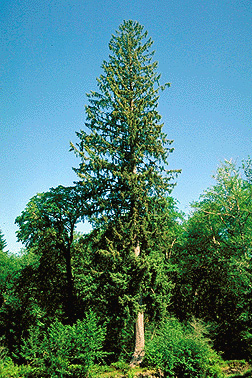
Sitka Spruce

Sitka Spruce

Summer of 1892. Leaving behind Fairhaven, Washington–the railroad boom town gone bust–Jimmy Scanlon is returning to Everett, after unloading his Fairhaven lots at a disastrous loss. He will be signing on to work track construction as the Great Northern Railway is completing its final link to Puget Sound. 

The congenial farm couple who give him a lift will again appear in his life.

Excerpted from Beyond The Divide–available from Village Books, Fairhaven; and from Amazon.

Gratefully the train arrived, with its promise of hypnotic motion and ever-changing view inducing trance-like forgetfulness. Barely out of town, it crossed the broad Skagit on the multi-spans of the steel draw he’d seen constructed two years earlier. The train skirted Big Lake—Mt. Baker still looming to the northeast—then cut through a narrow pass before emerging on the east side of little Lake McMurray, the parallel wagon road a visible shelf curving higher along the hill above the opposite shore. Another narrow valley followed, then a graceful curve on fill and pilings leading to a second steel draw—this one spanning the Stilliguamish—on whose south bank the former river port of Arlington had sprouted some years before. It had since transformed itself into a substantial railroad town, at the point where flatland transitioned into foothills.

Jimmy stared out the window as his train moved south, toward Snohomish, covering the miles toward Seattle—Judge Burke’s vision of a road built to spite the Northern Pacific, now a part of that system. Alighting at Snohomish, it being late, and the weather warm and fair, he walked a mile westward toward Everett, then found a comfortable spot of soft ground under the wide-reaching branches of a commodious old Sitka spruce, where he bunched the contents of his grip bag into an acceptable pillow and curled catlike against any night chill.

Dawn brought the promise of a yet warmer day, the sparse dew already drying, as Jimmy was gradually overtaken by a farm wagon. A chat ensued and when the man and wife learned that he was, or soon would be, working on the railroad construction, he was immediately invited on for the ride to Everett. The man proved quite taciturn—the woman, in her mid 30s, quite voluble, flashing eyes at Jimmy in a manner that, given the proximity of her bull-necked husband, he had to assume as friendly but not flirtatious. The wagon loaded down with vegetables—sacks of new potatoes, baskets of eggs, a few smoked hams—she related, they would be selling the entire load to the provisioners for the railroad construction contractors he would soon be working for. With the proceeds, she would update her “sewing notions” and kitchenware and hopefully have enough left over for calico for a new dress. Beyond necessary supplies and tools, they both hoped to haul home a new piece of furniture or two, maybe a few books. Their two young sons left home to take care of the days’ tasks, the couple saw it as a bit of a holiday, with the first cutting of hay all now in the barn. The only animation the husband showed was when the topic of the railroad came up. He seemed to Jimmy to have a strong animus toward his local merchants at Snohomish, whom he said were in cahoots with the Northern Pacific and were out to gouge the farmers on costs for all supplies brought in, and that the N.P. was also in league with the produce houses and creameries in Seattle, charging exorbitant rates and paying them little—that they could get better deals in Everett, where the railroad still had competition from the boats.

“And it’s the Northern Pacific that brought us out here,” the wife said. “Looking for land in Wisconsin we were; then we saw one of their brochures.”

“I was the youngest of eleven kids,” the farmer interceded, “raised on a farm in Ohio—built up by my grandfather. My father’s getting on now so my brothers are fighting over the place. There was no room there for me.”

He viewed the coming of the Great Northern through the Snohomish Valley as a godsend, bringing competition practically to their doorstep—giving Jimmy indirect credit for his minor role in the process, though in the long run the farmer said he saw nationalization of the railroads as the only hope. “Once Jim Hill gets his road up and running out here, you think he’ll stand for all that competition from the N.P. right under his nose? No sir. He’ll control ‘em both, there’ll be a Great Northern Pacific. Then we’ll be right back where we are now. And speaking of Hill, did you know he was in Everett last February? And there was Colby and Hewitt and the boys just falling all over themselves, trying to impress the man, playing up their Rockefeller connections…with their notion of a booming industrial city—hoping of course Hill would put his terminal facilities here instead of Seattle.”

“I’ve worked for Jim Hill before,” Jimmy interjected. “He’s not an easy man to impress.”

“So Hill—in a hurry to eat his dinner instead of listening to these gasbags—tells them the Great Northern is not a ‘real estate road’ and that they had better put all their dreams into timber. And all the Everett boys got from Hill was a promise he wouldn’t bypass the place entirely and cut straight to Seattle—that is, so long as they promised him a “school section!” One square mile, supposedly reserved in every township for public education—as spelled out in the Ordinance of 1787. And he hinted it wouldn’t hurt if they elected a conservative Democrat for mayor.”

The wife added they were both active in their local Grange, advocating for the Populists, the People’s Party. That as far as they were concerned both the Republicans and Democrats favored the monopolists and definitely couldn’t care less about the farmers.
“Hill supposedly has an interest in farming,” the husband continued. “Especially on a scale that can produce freight revenues. He says the country out here will make great farmland after the trees are cut…. I think he’s wrong on that. Ourselves, we got us some nice river bottom land—great for truck gardens and cows. ‘Course, it’ll flood now an’ then. But most of the woodland soil is too loose and acidic. Fit only for growing trees. And when the trees are gone, we might just get flooded out.”

Jimmy asked about the railroad already in place between Snohomish and Everett, visible from the wagon road they were following along the north shore of the river.

“Ha!” the farmer snorted. “That’s the Snohomish, Skykomish & Spokane Railway. All eight miles of it! The ‘Three S Road’—another venture of Hewitt and Colby and the Everett Land Company. The Rockefeller interests are taking it over…tying it into the line they’re building up to the mine at Monte Cristo…. Got a Canadian contractor name of Heney putting in the track. None of it helps us any. There’s still no regular freight or passenger service between Snohomish and Everett. We do have steamboats, such as they are, running up to Monroe and Gold Bar. Could be they’re the ones blocking the rail service.”
Apparently talked out, the husband again gave all his attention to the road and his team. The wife said when the G.N. was finished it would be nice to get to Everett in comfort in ten minutes instead of eating dust or getting rained on for over an hour. Jimmy felt a blush coming on when she turned to him with an amused look to inform him her “backside” was already getting sore bouncing on the spring seat. Crowded as they were on the seat, her hip brushing his, Jimmy became aware of a familiar and at times awkward sensation, shifting his legs so as to camouflage any visible indication. When it had thankfully subsided, he offered to go sit in the back with the hams and the sacks of potatoes but she insisted he stay up front. Her husband then intervened, saying the young fellow looked a bit rumpled and tired, like he hadn’t had a real comfortable night’s sleep, and he might just want to lay down in the wagon and catch a wink or two. Gratefully Jimmy climbed back into the wagon bed.

With no sense of time passing, he awoke to a face smiling over him, backlit by blue sky and sun. The effect hiding any lines and furrows brought about by hard work and weather and care, he saw over him an angelic vision. With all his moving about, it had become routine to awaken not knowing where he was, but now he lay unsure of if he was awake or dreaming, or even alive. The smiling angel was now gently shaking his shoulder and the halo turned out to be the rim of a sun bonnet. “We’re by Nelson’s Saloon,” the apparition spoke. “You slept back there so sound you could have been dead! There now, you are alive…. Time to part ways.”

In the heart of Everett, only a short walk to his rooming house, as the farm couple lurched off to conduct their day’s commerce, Jimmy—still befogged—realized he didn’t even know their name.

Impatient to begin working, Jimmy was tempted to seek out Mike Heney on the Monte Cristo railroad project, but waited another day; and then—following his original plan—hired on to work building the final link of the Great Northern Railway.

Posted in history, railroading, writing | Tagged , , , , , , , , | Leave a comment

A Return to “Boomtown” Fairhaven, Washington

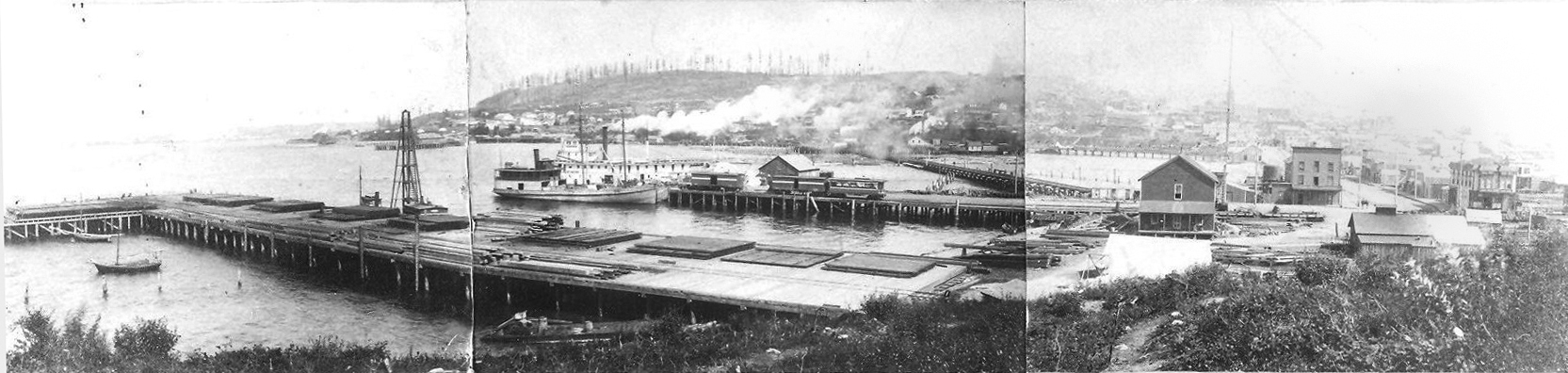
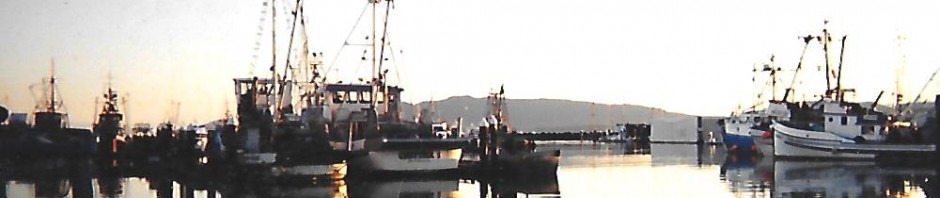
Fairhaven waterfront

Fairhaven waterfront

Summer of 1892. Two years have passed since Jimmy Scanlon’s July 4th beach-side idyll with Susie Taylor (see “Along Chuckanut’s Shore,” posted April 5, 2014). Sharing in the optimistic spirit of the time, Jimmy purchased three building lots in Fairhaven, the city’s promoters convinced Jim Hill’s Great Northern Railway would locate its western terminus there. As it turned out, Jim Hill had his eye on Everett, closer to Seattle.

The Great Northern Railway is poised to reach the Puget Sound shore at the growing port city of Everett, some 30 miles north of Seattle. To the east, crews are laboring to breach the summit of the Cascade Mountain, laying track in a westerly direction, up the eastern slopes. From Everett, the Cascade Mountains to the east appear as an impenetrable wall, snow-covered even in mid-summer. It is toward this barrier that a final gang is being hired to lay track, to meet the approaching westward-building gangs.

Excerpted (with some minor editing), from Beyond The Divide– available from Village Books, Fairhaven; and from Amazon. 

With still some days before start up of construction, Jimmy decided to spend his last pocket money on a quick trip on a new railroad extending north to Fairhaven, by way of farm-marketing towns Stanwood and Mt. Vernon. With the Great Northern mainline route finalized as coming over Stevens Pass and reaching the Sound shore at Everett, he thought it might be a good time to sell his three lots, now that it was certain Fairhaven would not be the western terminus of the G.N., but only a stop on a branch from Everett north to Vancouver, B.C. He could pay back his grandfather and bank the remaining proceeds for a time when he might yet go to college and study civil engineering.

Arriving in Fairhaven, walking up Harris Avenue to Ralph Stillwell’s office, Jimmy noticed a number of shuttered storefronts and more “for sale” and “for rent” signs than he’d expected to see. Sitting down in Stillwell’s office, he learned that the city’s de-selection as terminus by the growing Great Northern empire hadn’t only caused land prices in Fairhaven to level off. They were falling precipitously and businesses were shuttering. Construction had virtually halted. Jimmy felt a sickened sensation as Stillwell explained that his lots were worth considerably less than the balance owed on them.

“I like you, Scanlon, but I’ll save you the expressions of forced sympathy,” he said in a tone warmer than the words themselves. “Believe me, you’re not alone in this. You’re in good company—Wardner, Larrabee, Waldron; our losses are comparable to yours but multiplied on a grand scale. We’ve got fallbacks, we’ll keep going; but many in this city are totally wiped out. I did attempt to contact you, by the way, to apprise you of the situation, but you were quite unreachable. You did wire me payments regularly, but when I attempted to wire you back, well…you’d moved on.”

The sensation in Jimmy’s stomach was moving to his head. Thinking how embarrassing and effeminate it would be to faint, he forced himself to come around.

“Now, Scanlon, you’re turning green! Get a grip on yourself, man, and I’ll explain your choices…. There now. Sorry I have nothing stronger than water to offer you. I make it a habit to not drink during business hours…. Now, as to your choices: You could just hold on and keep making payments, as you have been. I’m not much older than you but I’ve been trying to look at this through the eyes of an old fossil like Jim Wardner. He’s learned that losing fortunes is only a prelude to making a new one. It’s like they say, ‘there’s always another deal.’ And there’s Bennett. He’s lost more money here than I’ll likely make in a lifetime, and I’d hazard a guess he’ll be a rich man again in a few years. He’s now back down in Tacoma, running the Ledger. And by the way, Will Visscher’s back there too, working for the Tacoma Globe again. They say he and Bennett have become sworn enemies!

“But, as I was saying, if you can watch your holdings go up, then go down, then go up again, I can guarantee you’ll come out far ahead in the long run. They’re excellent lots and this city still has a grand future. I expect by year’s end they’ll be going up again. If you’re ready to settle here, a move I’d highly recommend, you can build on them. Builders around here’ll work darn cheap right now. Or you could build for rental income and sell when the town booms again, which is only a matter of time. You could approach it like a businessman.”

“I don’t know if I have a head for business,” Jimmy said, getting his voice back. “It may be I’m cut out just to be a working stiff.”

“Now don’t belittle yourself, Scanlon. You got high approval from the likes of Nelson Bennett, and he’s no easy taskmaster. But I suspect you may not have the stomach for business. You’re the kind of man the likes of Wardner and I rely on—the kind who can do the real work to make our schemes succeed!”

“I got the sense on 4th of July last year that nobody here knew or cared if I even existed.”

“I suspect, old boy, that you’ve got that sensitive nature more suited to a poet than a businessman—although old Visscher managed at both, but I wouldn’t say he was very good at either. But as to last year, you oughtn’t to forget that you’d left Bennett’s employ and made no effort to keep up an association. You might say your “in” with us was through him. Not that we don’t like you, but with all the people you run into in life—with time being less plentiful than people—sometimes you have to set priorities…speaking of, let’s get down to business…. I suspect your preferred choice would be to wash yourself of the whole deal.”

“But my grandfather…he’ll see me as failing him.”

“Ah, my man! I’m seeing more and more you were never hard-boiled enough to make it as an entrepreneur or speculator. I don’t think you really care that much about money…. Oh, you like what it can do…it can create grand things, it can make life far more pleasant. When I’m again awash in it, I plan to cross new varieties of roses, and organize a yacht club…. Yes, and it can win people’s approval of you, make them envious. But money as a means to an end? No, no, dear boy! The accumulation of money is an end in itself! For the most afflicted among us, it is life itself.”

“Seek first the acquisition of money, and all these things shall follow.”

Stillwell leaned back in his swivel chair and laughed. “Yes, the gospel according to Mammon! And the churches are full of rich men who actually claim to be worshiping God…but, I digress. Now then, here’s what I propose…and it’s the best I can do for you. I can take the lots off your hands and free you from any obligation to continue payments. And I can pay you a percentage of what you made as a down payment—an amount, as I recall, equivalent to what your grandfather contributed. If you so choose, you can then pay him back…and chalk the rest to experience.”

He agreed to Stillwell’s proposal, again with the disquietude of feeling like a child when engaging with someone just a little older than himself; and accepted an invitation to a noonday meal. The nearby restaurant they entered seemed filled with the well-heeled people about town, by all appearances living as comfortably as ever. Jimmy decided to leave unanswered the question of how one reached a level of security whereby, even with huge economic setbacks, one’s manner of living continued in undiminished style. He also suspected that had he acted more the sharp “horse trader,” instead of the hat-in-hand nobody, he could have cut a far better deal in letting Stillwell buy him out—and that Stillwell had probably expected to do some bargaining.

Around the corner at Waldron’s bank, Jimmy cashed the draft Stillwell had given him and had it wired back to his Grandfather James, with only a terse note that he’d decided to sell the properties. Leaving town, he bought a ticket for Sedro-Woolley instead of Everett, choosing not to worry about his own diminishing supply of money. The more circuitous route would allow him to observe the Seattle, Lake Shore & Eastern Railroad’s more inland route, and the country it traversed.

Posted in history, labor, railroading, writing | Tagged , , , , , , | Leave a comment

“A Terrible Beauty Is Born”

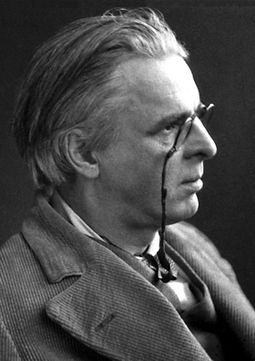
William Butler Yeats

William Butler Yeats


General Sir John Maxwell’s decision to quash even the thought of rebellion in Ireland–by sending 16 men to the firing squad, mostly young men, among them poets and teachers–had the unintended consequence of shifting world opinion of the 1916 rebellion into a favorable tide.

 In 1917, all prisoners from the Rising sent to England were released.

In 1919, the Sinn Feiners, combined with the republicans, won 73 out of the 105 seats allotted to Ireland in the House of Commons. Refusing to meet in London, they met in Dublin. Calling themselves the Dail Eireann, they declared all of Ireland a republic. The Irish Republican Army then fought an occupation by British soldiers, mostly hardened World War I veterans—the infamous Black and Tans.

The Government of Ireland Act of 1920, passed by the British Parliament, provided a form of Home Rule, but partitioned the country between Protestant north and Catholic south. A 1921 treaty allowed southern Ireland yet more autonomy as the Irish Free State—remaining, however, a Dominion in the British Empire.

Civil war broke out in 1922 between those seeking to unite the nation as an independent republic—led by Eamon de Valera—and those who accepted the treaty, led by Michael Collins. Fighting ceased in 1923 and the two sides—the Republicans and the Free Staters—became opposing political parties. Not until 1949 did the Dail Eireann establish southern Ireland as an independent republic, disassociated from the British Commonwealth.

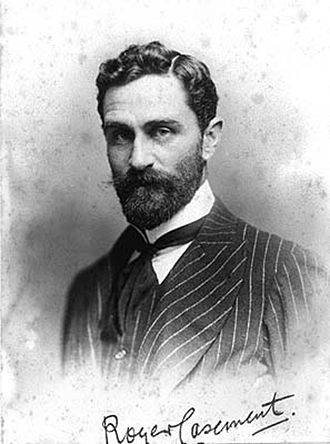
Roger Casement was hanged in London on August 3rd, 1916. Circulation of his Black Diaries, revealing homosexual encounters, had caused his former admirers to distance themselves—including President Wilson, who chose not to intervene on his behalf. Forty-eight-and-a-half years later, Casement’s remains were returned to Ireland. On February 23rd, 1965, a funeral was held surpassing in grandeur that held for Jeremiah O’Donovan Rossa half a century earlier. Eamon de Valera—82-year-old President of Ireland—gave the final oration for Sir Roger Casement.

in02_t01

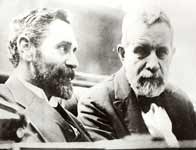
Sir Roger Casement meeting with John Devoy in New York

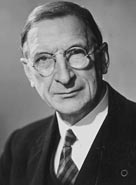
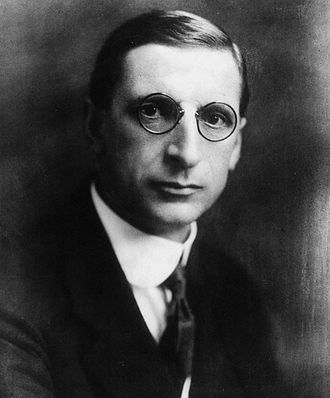
Eamon de Valera (1882-1975) President of Republic of Ireland

Eamon de Valera
(1882-1975)
President of Republic of Ireland

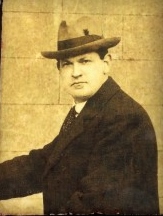
Michael Collins, Commander in Chief of the Free State Forces during the Irish Civil War, was killed in an ambush in Cork in 1922.

Michael Collins

Michael Collins


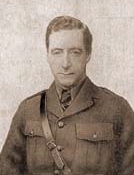
Cathal Brugha, riddled with bullets and grenade fragments at the start of the Easter Rebellion, miraculously recovered—only to be fatally shot six years later, by one of his own countrymen, during the Irish Civil War.

Cathal Brugha from Wikipedia

Cathal Brugha
from Wikipedia

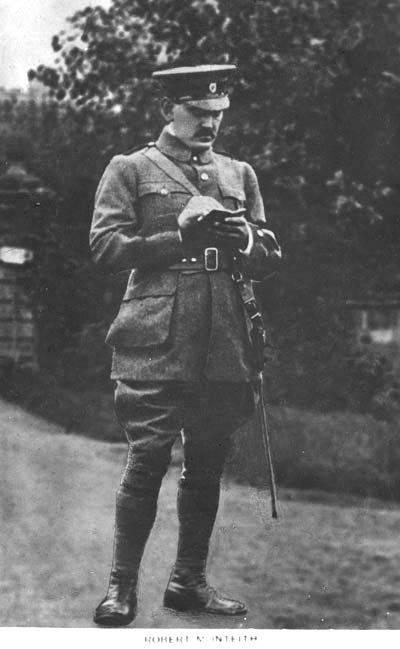
Captain Robert Monteith, who traveled with Casement form Germany on the U-20 (noted for its learlier sinking of the Lusitania) and the U-19—a journey ending by rowboat at Tralee Bay—was reunited in New York in December of 1916 with his wife Mollie and two young daughters. He died in 1956.

Robert Montieth

Robert Montieth

Kathleen (Kattie) Clarke, widow of executed Old Tom Clarke, served as Lord Mayor of Dublin from 1939 to 1941, and twice as Senator in the Irish Parliament. She died in 1972 at age 94 and was given an Irish state funeral.

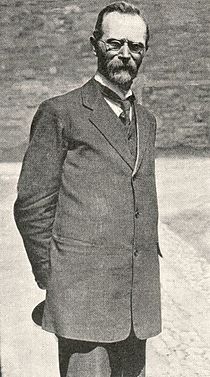
Eoin MacNeill, Chief of Staff of the Irish Volunteers—opposed to Pearse’s plan for an Easter uprising—was court-martialed two weeks following the execution of McDermott and Connolly and sentenced to life imprisonment. He was released a year later, spent 10 years in Irish politics, and lived till 1945.

Eoin MacNeill Chied of Staff on the Irish Volunteers

Eoin MacNeill
Chied of Staff of the Irish Volunteers

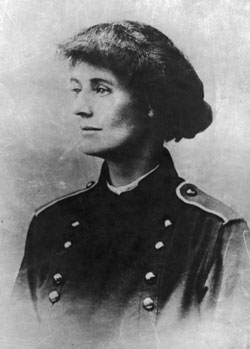
Countess Constance Markievicz made good on her vow to become a Catholic. The first woman ever to be elected to the British House of Commons, she never took her seat. She died among the poor in Dublin in 1927.

The Countess Constance Georgine Markiewicz from Wikipedia

The Countess Constance Georgine Markiewicz
from Wikipedia

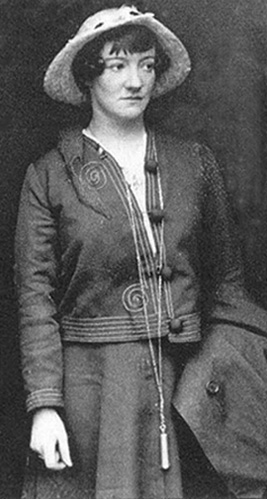
Grace Gifford Plunkett, widow of executed poet Joseph M. Plunkett,  never remarried. She fought on the Republican side in the Irish Civil War and was imprisoned in Kilmainham jail—the site of her grim late-night wedding.

Grace Gifford Plunkett from Wikipedia

Grace Gifford Plunkett
from Wikipedia


And what if excess of love

Bewildered them till they died?

I write it out in a verse—

MacDonagh and MacBride

And Connolly and Pearse

Now and in time to be,

Wherever green is worn,

Are changed, changed utterly;

A terrible beauty is born.

William Butler Yeats

Posted in Easter Rebellion, history, Ireland, Irish poetry, love, writing | Tagged , , , , , , , , , , , | Leave a comment

The Easter Rising, 1916. The Final Executions, May 12


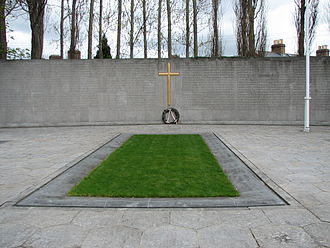
The site ofGeneral Maxwell's Quicklime Pit. Prison yard of Clairbone Prison. BurialpPlace of the 1916 Rising leaders. The Proclamation of the Republic of Ireland is inscribed on the wall.

The site of General Sir John Maxwell’s quicklime pit. Old prison yard of Arbour Hill Prison. Burial place of the 1916 Rising leaders. The Proclamation of the Republic of Ireland is inscribed on the wall, in English and Gaelic. From Wikipedia


Thursday, May 11

After visiting Connolly that afternoon, Father Aloysius prayed there would be no more executions. How could there be? Already there were voices—some mere murmurs, others growing strident—beginning to sound throughout Ireland, indicating a shift in public opinion regarding the rebellion; and from across the ocean, from America with its huge politically-connected Irish population; and the pronouncements of prominent Irishmen in England too—Bernard Shaw and John Dillon among them—were proving prophetic.

Though occurring years before his time, Father Aloysius had grown up hearing from oldsters firsthand accounts of the Great Famine of the 1840s. Later he’d read about it. He’d read excerpts from The Nation, contemporary accounts and comments by the great John Mitchel. The stupidity of English policy toward Ireland back then was obvious to all but England. Had nothing been learned in 70 years?

At nine o’clock that evening, Captain Stanley—a kindly officer reluctantly stationed at Kilmainham Jail—requested that Father Aloysius be at the jail at two o’clock the following morning.


Friday, May 12

At 1 a.m., an automobile was dispatched to pick up Lillie and Nora Connolly. James Connolly had been awakened from his first non-morphine induced sleep in days. The pain in his foot returned in full force on hearing he was to be taken by ambulance to Kilmainham and carried to the Stonebreakers’ Yard to be shot at dawn.

At 3 a.m., Father McCarthy heard Sean McDermott’s last Confession. Half an hour later, McDermott wrote his final letter:

I, Sean Mac Diarmada, before paying the penalty of death for my love of Ireland, and abhorrence of her slavery, desire to make known to all my fellow-countrymen that I die, as I have lived, bearing no malice to any man, and in perfect peace with Almighty God.

The principles for which I give my life are so sacred that I now walk to my death in the most calm and collected manner. I meet death for Ireland’s cause as I have worked for the same cause all my life. I have asked the Rev. E. McCarthy, who has prepared me to meet my God and who has given me courage to face the ordeal I am about to undergo, to convey this message to my fellow-countrymen.

God save Ireland. Sean Mac Diarmada.

Sean McDermott from Wikipedai

Sean McDermott
from Wikipedia


A little before 4 a.m., as the body of Sean McDermott was being born to a truck for transport to the quicklime pit, James Connolly was being propped up in a chair at the opposite end of the Yard where 14 others had been shot over the past nine days.

 As he was being blindfolded, Father Aloysius asked if he would pray for the young soldiers who were about to shoot him. “I will say a prayer for all brave men who do their duty,” Connolly replied.

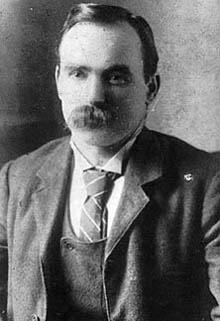
James Connolly from Wikipedia

James Connolly
from Wikipedia


As his rotund torso sagged against the ropes tying him to the chair—first from the volley of 12, then from the final shot to the head—Father Eugene McCarthy anointed him with the same oil on his thumb he’d usedonly moments earlier on Sean McDermott.


Reference: Rebels, by Peter De Rosa

Posted in Easter Rebellion, history, Ireland, writing | Tagged , , , | Leave a comment

Aftermath of the Easter Rising, May 7-10, 1916

“If you were not so dense and so stupid, as some of you English people are, you could have had these men fighting for you…”

-John Dillon, Irish Nationalist Party, British House of Commons


Sunday, May 7, 1916

Eamonn Kent, Commandant of the Irish Volunteers; Michael Mallin, Chief of Staff of the Citizen Army; and Sean Heuston and Con Colbert—both unit commanders of the Volunteers—attended Mass at the Kilmainham chapel. Prison Chaplain Eugene McCarthy celebrated the Eucharist.

That afternoon, all four officers of the Rising were told they would be executed at sunrise the coming morning. In his cell that evening, Colbert wrote notes to his brother and sisters, telling them he’d requested to have no visitors, to spare them further pain. To his sister Nora he wrote, “Don’t blame me—perhaps God’s way of saving my soul.”

In the adjacent cell, Mallin wrote goodbyes to his parents and his wife—four month’s pregnant—giving regards to their four children, ages two-and-a-half to 12. To her he wrote:

I do not believe our Blood has been shed in vain. I believe Ireland will come out greater and grander but she must not forget she is Catholic, she must keep her Faith.

I find no fault with the soldiers or police. Pray for all the souls who fell in this fight, Irish and English.

In the early hours, Michael Mallin’s family visited, receiving some comfort from a Dominican priest, Father Brown.  Family composure was nearly lost when little Sean asked for his Da‘ to come home with them.


Monday, May 8, 1916

Father Albert went with Sean Heuston to the Stonebreakers’ Yard. Father Augustine accompanied Michael Mallin. The work of two firing squads completed, the two Capuchin friars soon returned to the yard, escorting Con Colbert. The soldier blindfolding him first shook his hand, then looked away, choking back tears. Following the final pistol shot, Father Albert anointed the unassuming young baker’s clerk, now fallen before him, while Father Augustine was led back to the cells to accompany Eamonn Kent.

Sean Heuston Unit Commander Irish Volunteers from Wikipedia

Sean Heuston
Unit Commander
Irish Volunteers
from Wikipedia

Michael Mallin  British Army to Silk Weaver to Irish  Chief-of-Staff of Irish Citizens' Army  from IrishCentral

Michael Mallin
British Army to Silk Weaver to Irish
Chief-of-Staff of Irish Citizens’ Army
from IrishCentral

Conn Colbert Unit Commander Irish Volunteers from Wikipedia

Con Colbert
Unit Commander
Irish Volunteers
from Wikipedia

Edward Kent (Eamonn Ceannt) from Wikipeda

Edward Kent
(Eamonn Ceannt) Commandant, Irish Volunteers
from Wikipeda


In the Tower of London, Sir Roger Casement swallowed South American Indian arrow poison. He was found by a guard in his fetid cell and taken to have his stomach pumped.

Sir Roger Casement from Wikwpedia

Sir Roger Casement
from Wikipedia


At 2 p.m. in Dublin, Eamon de Valera faced court martial and—pronounced guilty—was transferred to Kilmainham jail.

John Dillon, of the Irish Nationalist Party, saw his pleas for leniency—first to General Maxwell, then to Prime Minister Asquith himself—fall on deaf ears. Hearing of British soldiers shooting 16 non-fighting civilians Friday night—shot to death in their homes on North King Street—and the rampages of the deranged Captain Bowen-Colthurst, more than once Dillon was heard to say:

“Cromwell is risen from the dead and is stalking the land again.”

Kattie Clarke, after loosing her husband and brother, miscarried her baby. It would have been her and Old Tom’s fourth child.

Now in the prison where nine of his fellow rebels had been so recently kept and shot, de Valera grew certain he would be the 10th. He thought of his boyhood in Bruree, County Limerick, amid the hills, tending cows or hiking along his favorite brooks. And of serving as an alter boy for Father Eugene Sheehy, (uncle of Hanna Sheehy, who became suffragist Hanna Sheehy-Skeffington). And of Sinead Flanagan, the girl who taught him Gaelic and became his wife.

Eamon de Valera MathematicsTeacher Turned Rebel Commandandt Later- President of Irisn Free State from Wikipedia

Eamon de Valera
Mathematics Teacher Turned Rebel Commandant
Later- President of Irish Free State
from Wikipedia

Still musing in his cell, Eamon de Valera wrote to Sister Gonzaga, a colleague at Trinity College, where he taught mathematics. He asked her to pray for his soul, and “for my poor wife and little children who I leave unprovided for.”


Tuesday, May 9, 1916

At 11 a.m., Sean McDermott was found guilty at court martial, and transferred to Kilmainham Jail.

Sean McDermott from Wikipedai

Sean McDermott
from Wikipedia

At the Castle that afternoon, James Connolly, his foot growing increasingly gangrenous, was dressed in clean pajamas and moved on a mattress, propped up so as to face court martial. In a monotonous drone—incongruous with his stirring words—he gave his defense:

“We went out to break the connection between this country and the British Empire and to establish an Irish Republic. We believe that the call we then issued to the people of Ireland was a nobler call, in a holier cause, than any issued to them during this war, having any connection with this war.

“We succeeded in proving that Irishmen are ready to die endeavoring to win for Ireland those national rights which the British government has been asking them to die to win for Belgium. As long as that remains the case, the cause of Irish freedom is safe.

“Believing that the British government has no right in Ireland, never had any right in Ireland, and never can have any right in Ireland, the presence, in any one generation of Irishmen, of even a respectable minority, ready to die to affirm that truth, makes the Government forever a usurpation and a crime against human progress.

“I personally thank God that I have lived to see the day when thousands of Irish men and boys, and hundreds of Irish women and girls, were ready to affirm that truth, and to attest it with their lives if need be.”


Later visiting his wife Lillie and eldest daughter Nora, Connolly suggested his wife should return to the States. That for financial support she could get Skeffy to edit and publish his writings. Nora then informed her father that Mr. Skeffington had been shot dead in the back by an Irishman—drunk in the line of duty, but acting with total deliberation—serving as an officer in the British army. Then she had to tell him of the executions in the Stonebreakers’ Yard—that of the signatories of the Proclamation, there remained alive only he and McDermott.


Wednesday, May 10, 1916

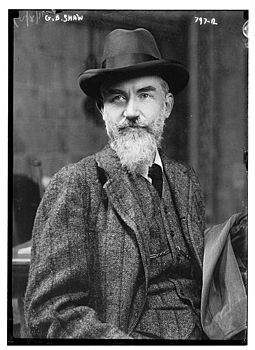
The London Daily News featured an article by George Bernard Shaw, wherein he affirmed his own Irishness while castigating the British for their seeming ignorance of the fact that each man executed “only adds…to his glory in the eyes of his compatriots and of the disinterested admirers of patriotism throughout the world.” And that, especially given the Irish character, “…it is absolutely impossible to slaughter a man in this position without making him a martyr and a hero, even though the day before the rising he may have been only a minor poet.” He concluded with:

I remain an Irishman, and am bound to contradict any implication that I can regard as a traitor any Irishman taken in a fight for Irish Independence against the British government, which was a fair fight in everything except the enormous odds my countrymen had to face.

George Bernard Shaw Irish Playwright from Wikipedia

George Bernard Shaw
Irish Playwright
from Wikipedia


In the afternoon, John Dillon—along with John Redmond, champion of Home Rule—spoke before the House of Commons:

“You are letting loose rivers of blood, and, make no mistake about it, between two races who, after 300 years of hatred and strife, we had nearly succeeded in bringing together.

“It is the first rebellion that ever took place in Ireland when you had the majority on your side. It is the fruit of our life work. We had risked our lives a hundred times to bring about this result. We are held up to odium as traitors by those men who made this rebellion; and our lives have been in danger a hundred times during the last 30 years because we have endeavored to reconcile the two things, and now you are washing out our whole life work in a sea of blood.”

John Dillon Irish National Party, House of Commons from Wikipedia

John Dillon
Irish Nationalist Party, House of Commons
from Wikipedia


Ignoring the increasing catcalls in the chamber, he accused Englishman of thinking of Ireland as nothing more than England’s back yard. The pandemonium increased when he began praising the rebels.

“I say I am proud of their courage, and, if you were not so dense and so stupid, as some of you English people are, you could have had these men fighting for you, and they are men worth having. It is not murderers who are being executed: it is insurgents who have fought a clean fight, however misguided, and it would have been a damned good thing for you if your soldiers were able to put up as good a fight as did these men in Dublin!”


This last verbal barrage directed toward high ranking military officers seated in the gallery, all demands for order in the chamber went unheeded. Dillon paused to let the pandemonium he’d unleashed die down. He then contrasted the present British policy in Dublin with that of Lincoln following the American Civil War, where not one Southern instigator or leader or officer was executed—allowing the fractured nation to begin the perilous process of reunification.

Dillon then concluded with a reference to the Skeffington shooting. To his surprise, Prime Minister Asquith reacted with shock and surprise—he hadn’t even been informed of the murderous misdeeds of one of their own officers. Asquith then added a closing comment to Dillon’s speech:

“So far as the great body of insurgents is concerned I have no hesitation in saying in public they have conducted themselves with great humanity which contrasted very much to their advantage with some of the so-called civilized enemies which we are fighting in Europe. They were misled, almost unconsciously, I believe, into this terrible business.”


Reading the Confessions of St. Augustine in his cell in Kilmainham Jail, de Valera was informed he was sentenced to death. Reacting without flinching to the expected announcement, he then heard the sentence was commuted to life imprisonment. Eamon de Valera remained stone-faced.

With news spreading that “Dev” was to be spared the firing squad, hope went around Dublin and throughout the provinces that the purges of “Bloody Maxwell” were coming to an end. And that Sean McDermott—a cripple—and James Connolly—severely wounded—would be spared.

Reports came from London that Roger Casement was allowed a visit by a lawyer, thanks to the intervention of a friend by the name of Gertrude. Finding the once-esteemed man to be in deplorable condition physically and mentally—still in the same suit he’d been wearing since his submarine journey to Tralee—the lawyer threatened to take what he saw to the American press. Sir Roger’s conditions began an immediate improvement.

In New York, John Devoy tried to reassure Molly Monteith that her husband Robert, who’d made the submarine journey from Germany with Casement, was alive—though he himself wasn’t certain.

Reference: Rebels, by Peter De Rosa

John Devoy from Wikipedia

John Devoy
from Wikipedia


Posted in Easter Rebellion, history, Ireland, writing | Tagged , , , , , , , , , , , , , , , , , , | 2 Comments

Aftermath of the Easter Rising–The Executions Continue

“When I’m finished, there’ll be no treason even whispered in Ireland for the next 100 years.”

–General John Maxwell, British Army

General Sir John Maxwell from worldwarone.com

General Sir John Maxwell
from firstworldwar.com


Thursday, May 4, 1916

Soon after midnight, Ned Daly received a visit in his cell from sisters Kattie Clarke, Madge and Laura. Though given a permit for allowing only one to visit, the three remained locked together as though chained, unshakable in their resolve to see their condemned brother together. None of the soldiers opposed them. Kattie told Ned that her Tom had been shot the previous morning, and that their Uncle John, Tom Clarke’s prison mate for 11 years, regretted not being able to join him. Impressing the guards with their composure, not even crying let alone fainting, the three young women bade their brother goodbye. On their way out they met the sisters of Michael O’Hanrahan, who were under the illusion their brother was to be sent to England. When Eily O’Hanrahan demanded further information regarding this, a soldier announced their brother, along with three others, was to be shot at dawn.

That same night, in yet another moldy cell—smelling of old urine and lit by a single candle—Mrs. Pearse told her surviving son Willie that their Pat was dead. Willie proudly told her that at his own court martial he’d made no attempt to deny his participation in the Rising. The brothers inseparable since toddler years, Mrs. Pearse knew Willie had to follow once again the older brother he idolized.

At 2 a.m., Grace Gifford Plunkett was allowed 10 minutes to visit her husband of two and a half hours. A soldier-guard checked his watch. Grace had noticed the faces of the soldiers at Kilmainham—some barely old enough to shave, many of them Irish. All were participating in a greater movement, as the work of so many—often at disparate activities—can coalesce to run a great ship or to operate a railway. Only this combination of tasks led not to the movement of trains, or of a vessel over thousands of miles of ocean, but to the execution of a dying man, a young poet.

A Captain Kenneth O’Morchoc was assigned to lead the firing squad. He asked to be excused from the duty, as he and Joe Plunkett had played together as young boys. The commandant assented.

As dawn approached, four Capuchin friars arrived in an automobile. Father Columbus was assigned to administer to Ned Daly, hoping to be more effective than the day before, when he’d asked for final repentance from Daly’s brother-in-law, Tom Clarke. The older Father Augustine—of generous size, beard and disposition—was assigned to baby-faced Willie Pearse. Father Sebastian would accompany Joe Plunkett to the Stonebreakers’ Yard—as Father Albert would for Michael O’Hanrahan.

Edward (Ned) Daly Brother of Kathleen-- wife of Tom Clark from Wikipedia

Edward (Ned) Daly
Brother of Kathleen– wife of Tom Clark
from Wikipedia

William Pearse Brother of Patrick from Wikipedia

William Pearse
Brother of Patrick
from Wikipedia

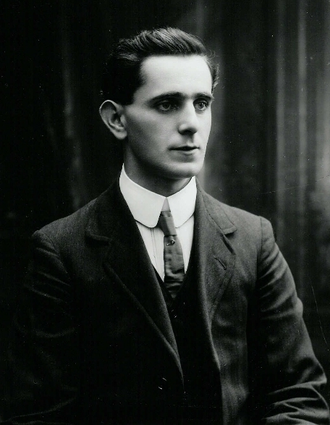
Joseph M. Plunkett from Wikipedia

Joseph M. Plunkett
from Wikipedia


Michael O'Hanrahan from Wikipedia

Michael O’Hanrahan
from Wikipedia

As another new sun began its dispersal of purple-gray gloom, four volleys—minutes apart—rang out, each quickly followed by a single pistol shot. Soon after—through streets of the awakening city—a motor-truck again lumbered, enroute to the quicklime pit. Already newsboys were leaving the Irish Independent and the London Times on doorsteps, as columns of breakfast-fire smoke drifted into a sky growing lighter by the minute.

In the early afternoon, another wave of rebel prisoners was assembled at Richmond Barracks for transport to internment in England. For those not inclined toward martyrdom—comprising the vast majority of the rebels—it meant a reprieve from sure death. Among those preferring to continue living to fight for Ireland another day were Sean McDermott and Michael Collins. When it appeared both would pass muster, a Castle detective, Inspector Burton, recognized the limping McDermott and had him fall out. It meant for him court martial and the firing squad. Collins swore he himself would live to extract his revenge on the gloating Inspector Burton.
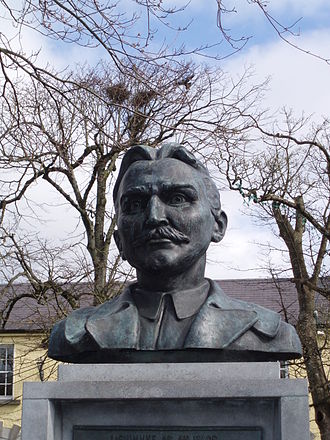
Later that afternoon, Major John MacBride went to military trial. Though not an instigator of the Rising, Major MacBride was nonetheless well-known to both the rebels and the British for his leading an Irish Brigade on the side of the Dutch during the Boer War. And he happened to be married to political radical Maud Gonne (longtime recipient of the unrequited love of poet William Butler Yeats). And he’d been a witness at the 1899 marriage ceremony of Tom Clarke and Kathleen Daly in New York. At last England would extract final vengeance against the renegade Major. He was found guilty, as were—that same afternoon—Michael Mallin, Chief of Staff of the Citizen Army and right-hand man of Connolly—and a short time later, the Countess Markievicz.

Friday, May 5, 1916

At dawn, John MacBride, escorted by Father Augustine, was marched blindfolded and handcuffed to the Stonebreakers’ Yard. After a final pistol shot to the head by the officer-in-charge, Father Augustine anointed Major MacBride with the oil of Extreme Unction.

Major John MacBride from Wikipedia

Major John MacBride
from Wikipedia

Next to be tried was Eamonn Kent, one of the seven signers of the Easter Proclamation of a Republic. Four of the signers were already in the quicklime pit—along with Willie Pearse and John MacBride, making a total of six.

Sinead de Valera at last gained her meeting with the American Consul. Her husband, Eamon, of Spanish and Irish extraction, had actually been born in New York. She was given hope he would be spared execution. The Democratic administration of Woodrow Wilson was already mindful of the effect the executions were having on Irish-Americans—nearly all stalwart members of the Democratic Party. Cardinal James Gibbons, 82-year-old Archbishop of Baltimore (who grew up in Ireland), had raised his concern over the “danger of manufacturing martyrs with senseless executions.”

Reference: Rebels, by Peter De Rosa

James Cardinal Gibbons Archbishop of Baltimore from Wikipedia

James Cardinal Gibbons
Archbishop of Baltimore
from Wikipedia


Posted in Easter Rebellion, history, Ireland, writing | Tagged , , , , , , , , , , , , | Leave a comment

Aftermath of the Easter Rising- Executions, May 3,1916

“Those in power write the history, while those who suffer write the songs, and, given our history, we have an awful lot of songs.”

–Irish balladeer Frank Harte


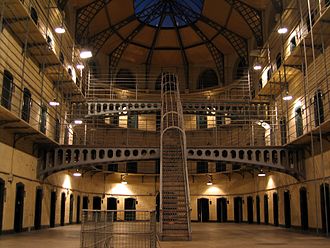
Kilmainham Jail from Wikipedia

Kilmainham Jail
from Wikipedia

Tuesday,  May 2, 1916

When informed of the shooting of “Skeffy” Skeffington—and other civilians playing no direct part in the rebellion—by the pitiless Captain Bowen-Colthurst, Secretary of War, General Lord Kitchner expressed outrage that such atrocities could occur in the British Army. Major Vane left with a telegram ordering that Bowen-Colthurst be arrested and face court martial.

Secretary of Ireland Augustine Birrell crossed the Irish Sea enroute to London, to formally tender his resignation to Prime Minister Herbert Asquith.

That afternoon in Dublin, Thomas Clarke, Patrick Pearce and Thomas MacDonagh were taken to Richmond Barracks for court martial—a General Blackadder the presiding military judge. Old Tom Clarke, dressed in an undertaker-like black suit, stood unmoving before the tribunal, refusing to enter a guilty or not-guilty plea. Pronounced guilty, he was led away in head-held-high silence. Next came Patrick Pearse. In contrast to the wordless Clarke, he gave a speech, its opening paragraph reaching back to the eloquence of John Mitchel and Wolf Tone.

“From my earliest days I have regarded the connection between Ireland and Great Britain as the curse of the Irish nation, and felt convinced that while it lasted, this country could never be free or happy.

“When I was a child of ten I went down on my bare knees by my bedside one night and promised God that I should devote my life to an effort to free my country.

“I have kept that promise.

“We seem to have lost. We have not lost. To refuse to fight would have been to lose; to fight is to win. We have kept faith with the past, and handed on a tradition to the future.

“I repudiate the assertion that I sought to aid and abet England’s enemy. Germany is no more enemy to me than England is. My aim was to win Irish freedom; we struck the first blow ourselves but should have been glad of an ally’s aid.

“I assume that I am speaking to Englishmen who value their freedom and who profess to be fighting for the freedom of Belgium and Serbia.

“Believe that we, too, love freedom and desire it. To us it is more desirable than anything in the world. If you strike us down now, we shall rise again and renew the fight.

“You cannot conquer Ireland. You cannot extinguish the Irish passion for freedom. If our deed has not been sufficient to win freedom, then our children will win it by a better deed.”


Observers say General Blackadder stared at him transfixed.

The military judges pronounced both Pearse and MacDonagh—both published poets, and teachers at St. Enda’s—guilty.

John Dillon, of the Irish Nationalist Party in the House of Commons, visited General John “Conky” Maxwell, warning him that executing the rebel leaders will send them to immortality and that, more immediately, will turn the people against the English—who thus far have opposed the rebellion and supported its suppression. Maxwell listened impatiently, then replied that when he was finished, there would be no treason even whispered in Ireland for the next 100 years.

That same afternoon, Joseph M. Plunkett, pale and tubercular, was called into court martial and pronounced guilty. He took hope in a rumor that the prisoners were to be sent to England, that he might yet marry Grace Gifford—their Easter wedding now postponed for over a week—by proxy.

In New York, John Devoy read through the papers. The New York Times pronounced Roger Casement “treacherous and perfidious.” Not really true, Devoy thought. More like addled and incompetent. The Washington Post suggested Casement be imprisoned and forgotten, that executing him in the Tower would make him an undeserving martyr. The Philadelphia Enquirer called for life imprisonment. Other papers stated the uprising was counterproductive to Irish freedom. Whoresons! Devoy whispered to himself, before putting a phone call through to McGarrity in Philadelphia.

Late afternoon in Dublin, Clarke, Pearse and MacDonagh were informed they would be shot at sunrise the following day. Forthwith, they were led away to the gothically grim Kilmainham Jail.

To Tom Clarke, being shot was the preferred alternative to returning to yet more years in prison. He’d been freed 18 years before, prematurely aged at 41 years old, having gone in as a youth of 21. In his solitary cell that night, he must have thought of his time in Portland Jail, locked up for 11 years near John Daly, his future wife’s uncle—where one of his better memories was providing flies for the spiders Daly kept. Both in solitude, the men had communicated by tapping on stone.

Pearse considered it an honor that he would spend his last night alive in Kilmainham, the Bastille of Ireland. It had housed Napper Tandy in 1798; then early in the next century, Robert Emmet, in prelude to hanging followed by beheading at age 25; and John O’Leary, Jeremiah O’Donovan Rossa, and Charles Stewart Parnell; and John Devoy (who later exiled himself to New York, to print the Gaelic American).

That same afternoon, unbeknownst to Pearse, Joe Plunkett, Michael O’Hanrahan and Ned Daly—Tom Clarke’s brother-in-law—were court-martialed.

That night, General Blackadder dined as a guest of the Countess of Fingall. To those at the table, he announced he had just condemned to death one of the finest characters he’d ever happened upon—a man by the name of Pearse. Between sips of wine, he commented sadly on the state of society, that a poet and teacher—said to be adored by his pupils—should become a rebel.

In the night Kathleen Daly Clarke, pregnant with their fourth child, was allowed to visit her husband—following a visit by the young Capuchin friar, Father Columbus, from whom Old Tom refused the sacraments.

Pearse had a more satisfying visit from young Father Aloysius—who then went on to administer to MacDonagh, who asked if he could have his sister—a nun in a nearby convent—visit. Father Augustine arranged with the British major in charge to have Sister Francesca brought over in an automobile. After receiving Communion, Thomas MacDonagh gave to Father Aloysius a picture of his very-young children, Donagh and Barbara. These he entrusted with the priest to be delivered to wife Muriel (sister of Grace Gifford, betrothed to Joe Plunkett), along with a farewell note to all three of his family.


Wednesday,  May 3, 1916

In the early hours, Sister Francesca was told the time visiting her brother in the tomb-like cell was over. “The national rose of Ireland is An Roisin Dubh, the Little Black Rose, not the tender red flower to be plucked with the joys of life,” she remembered her brother once saying. Now giving him their mother’s rosary beads, she asked him to wear them, that he might be embraced by them in his final moments. Tom MacDonagh informed his sister the beads would be shot to bits.

First to be led at dawn into the Stonebreakers’ Yard—the site of centuries of penal labor—was Old Tom Clarke. The procedure for MacDonagh and Pearse would be the same; blindfolding, a paper heart pinned to the left side of his chest as target, a 12-man firing squad—six kneeling, six standing—pulling triggers on order, then with the victim lying in quivering death throes as the blood pooled over the stones, a final pistol shot to the head by the presiding officer.

Thomas J. Clarke from Wikipedia

Thomas J. Clarke
from Wikipedia

Patrick Henry Pearse from Wikipedia

Patrick Henry Pearse
from Wikipedia

Thomas MacDonagh from Wikipedia

Thomas MacDonagh
from Wikipedia

The gun shots were heard by all in the moss-dripping stone cells of Kilmainham, including Pat Pearse’s brother Willie. As the bodies were hauled on truck-bed through the streets of Dublin under the darkness-chasing gray light of emerging day, on the way to General Maxwell’s quicklime pit, Father Aloysius—in black vestments—was saying a Requiem Mass.

“A shame,” an Irish guard—who’d heard of the quicklime pit—was heard to say. “Not even their guardian angels will recognize them.”

Returning to pick up Pearse’s crucifix and MacDonagh’s damaged but still-intact rosary beads, Father Aloysius appealed to the major in charge that in the event of more executions, he be allowed to be with the men as they were fallen, that a man being executed cannot receive the Last Rights anointment until just after the moment of death. “Just before the soul leaves the body,” the kindly young bearded friar clarified. The commandant—sympathetic, though puzzled by the Irish and their obsessively-ritualized Catholic ways—agreed to the request. The priest then steeled himself for the task of visiting the now-fatherless MacDonagh family, and to Pearse’s elderly widowed mother, who still had one surviving son.
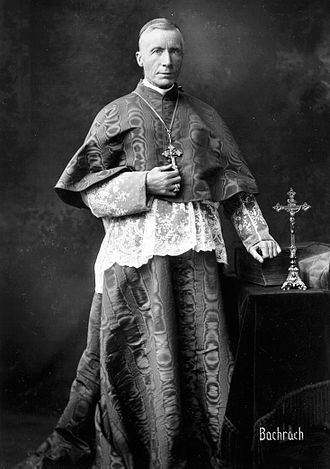
Surely, Father Aloysius thought, they would spare Willie—still a boy at heart, who idolized his brother, but had no real role in planning or leading the Rising.

Prime Minister Herbert Asquith expressed concern at the shooting of so many rebel leaders—though thus far there were only three—and requested that the Countess Markievicz not be executed.

At 3 p.m. Augustine Birrell announced his resignation to the saddened Prime Minister. Sir John Redmond, parliamentry chairman of the Irish Nationlists—an Irishman who got on with the English—and Augustine Birrell—an Englishman who loved Ireland—each faced a very unsympathetic House of Commons to deliver their “swan song” speeches. With none of his characteristic wit and grace, looking yet more rumpled than usual, Birrell made a perfect target for heckling. And Redmond too was witnessing his own political death, ruminating on the fact that were not his approved Home Rule bill shelved—thanks to the war with Germany and the efforts of Edward Carson—there would have been no rebellion and he would have been elevated to Head of the Irish Administration.

At 11:30 at night, Joseph Mary Plunkett and Grace Gifford were married in the forbiddingly ancient and austere chapel at Kilmainham Jail—Father Eugene McCarthy, jail chaplain—presiding. Two soldiers were pressed into service as witnesses. At the end of what must rank as one of history’s most joyless weddings, Plunkett—29 years old and still short of his full flowering as a poet, facing death by both disease and, more immediately, by tribunal—was led back to his cell.

 Reference: Rebels, by Peter De Rosa

Posted in Easter Rebellion, history, Ireland | Tagged , , , , , , , , , | 9 Comments

Easter Rising, 1916- Days 5, 6, and 7


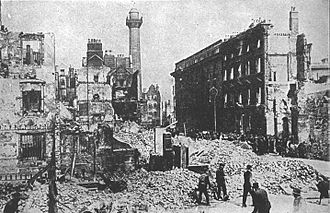
Sackville (O'Connell) Street after the Rising from Wikipedia

Sackville (O’Connell) Street
after the Rising
from Wikipedia

Mike Scanlon’s journal entries continue:

Friday, April 28, 1916

It’s painfully plain that the rising is not spreading outside of Dublin. There is no Irish Brigade made up of German-held P.O.W.s, there are no German arms, and the majority of the people are not behind it—though admiration is growing, and the atrocities committed under the British flag by the likes of a few such as Captain Bowen-Colthurst—murderer of teenagers and newspaper editors and Francis Sheehy-Skeffington—are having an effect on public opinion.

The ability of the rebels to maintain the occupation—now four days old—of the General Post Office is mostly due to the difficulty the British are having in training artillery directly on to the building. However, communication is now completely cut off from de Valera, Kent and MacDonagh—commandants of the outlying positions—and from Michael Mallin and the Countess Markievicz, Connolly’s Citizen Army cohorts. British snipers have taken positions rivaling those of the rebels. And what artillery has been unable to accomplish in the central city, incendiary bombs are beginning to.

At 4 p.m.—one week past Good Friday—Sackville Street is reported to be in flames. Tom Clarke and Sean McDermott, the rising’s two leading “civilians,” are said to be fighting fires in the G.P.O. with uncertain water pressure and half-rotted, leaky old hoses. Father O’Flanagan, the day before drafted as chaplain for the Irish Republican Army, continues his ministering to the men and women, voluntarily holed up inside the G.P.O., along with a captured English medical student now serving as medic. Connolly’s lower leg wound is threatening to turn gangrenous. Plunkett, his wedding postponed for nearly a week, is growing weaker by the day from T.B.

By 6:30, fire is threatening to swoop down the elevator shafts. Once again, the munitions were moved by hand.

Saturday morning in Seattle, we’re hearing more detailed reports from last night, aided by the time difference. After dark, the General Post Office, replete with interior barricades of newsprint bales and collapsed timbers, began to further crash down around the rebels in intense heat. Sean McDermott issued a plan of escape, out the rear of the building and westward, to meet up with Ned Daly’s Four Courts battalion.

First to leave was a group of 30 led by Michael Joseph O’Rahilly (who, along with not-present Eoin MacNeill, had not approved of the rising). Charging up Henry Street, O’Rahilly and his men parted their own barricade on Moore Street. Approaching the British barricade at Sackville Place, O’Rahilly divided them to the left and right, then zigzagged between them to draw fire away. The ominous stillness ceased as volleys rang out from windows and behind barricades from all directions. Of the 30, 26 were killed instantly. In the deafening fusillade, O’Rahilly took multiple hits. When his riddled corpse was found this morning, where he’d dragged himself around a corner, a note in his pocket pierced by a bullet hole had a message to his son Aodghan. On the back, in dying hand, he’d added a note to his wife Nancie.

Michael Joseph O'Rahilly

Michael Joseph O’Rahilly

Around 10:30, the wounded were moved out of their refuge at the Coliseum Theatre, as it too caught fire. With Father O’Flanagan and prisoner Dr. George Mahoney carrying the flag of the Red Cross, the British allowed the group safe passage to Jervis Street Hospital, where we’ve heard the nurses and nuns are welcoming them as heroes.


Saturday, April 29, 1916  –  The Sixth Day of the Irish Republic

Their nerves frayed by day-and-night rebel sniper fire and the unique difficulties of street fighting, the British reacted by raining overnight terror on North King Street. Women and girls were locked in the rooms of their homes as husbands and sons were taken to other rooms and shot. When doors proved an inconvenient entry, walls were broken down. Homes were ransacked. It didn’t matter whether or not a house had actually been in use by snipers.

Families fell dead from gunfire as they fled burning homes. Pearse saw a man and wife and daughter lying dead on a sidewalk, a castoff white flag beside them. Newly appointed by Connolly, 15-year-old Commandant of the Dublin Division Sean MacLoughlain reported to Pearse that he had raised 20 more volunteers—then, responding to Pearse’s questioning, said they would all die on their planned assault of the British barricade at Moore Street. Minutes earlier, Sean McDermott had quietly informed Pearse that Michael O’Rahilly had been shot dead in the street the night before, with a note in his pocket to his wife and son.

Before noon, Pearse announced to his six fellow leaders of the Provisional Government his decision to surrender. They’re saying, upon hearing this, that Old Tom Clark stood up and faced the wall, silently, his shoulders heaving.

Thomas J. Clarke from Wikipedia

Thomas J. Clarke
from Wikipedia

At risk of life, Elizabeth O’Farrell, Connolly’s secretary-nurse—under white flag carried the message to General Lowe. In Tom Clarke’s tobacco shop, Lowe ordered a ceasefire. For the first time in nearly a week, the streets are quiet.

At 3:30 in the afternoon, next to the Parnell Monument, Patrick Pearse—agreeing to unconditional surrender—presented his sword to General Lowe. He was then put in an auto to be brought to General John “Conky” Maxwell—now the wielder of British military power in Dublin.

Connolly was put under heavy guard in an officers’ quarters room in Dublin Castle.

Sean McDermott from Wikipedai

Sean McDermott
from Wikipedia

Sean McDermott faced both anger and tears when he announced to the rebels assembled at Moore Street the decision to surrender. Tom Clarke, whom they say would have preferred to fight to the death, nonetheless backed McDermott in persuading the men to honor the ceasefire.

Looking, they say, as though in a rapturous dream, Pearse—the poet and teacher of Gaelic language and legends—has signed the surrender papers at Parkgate. In his makeshift hospital room at the Castle, Connolly has authorized the surrender of his Citizen Army followers. As of 6 p.m., Ned Daly has surrendered his battalions at Four Courts. Marching past St. John’s Convent for the last time, the men gave their revolvers to the sisters who’d been cheering them on each morning. A Sister Louise hid hers in the folds of her habit, saying, “Even my guardian angel won’t know it’s there.”

Under the late-evening shadows of Nelson’s Pillar and the shell of the G.P.O., Willie Pearse, Sean MacLoughlain and Joe Plunkett walked, holding white flags in a manner suggesting victory banners. Behind them, the rebels—the Irish Republican Army (including a number of women)—marched four abreast. “Vicious Irish bastards!” some of the watching Tommies called out, their machineguns trained.

There were still overturned trams in the streets, and corpses rotting on doorways. Above the ruin of the General Post Office, the green flag—the words Irish Republic still visible—flew at a cocked angle.

The Countess Constance Georgine Markiewicz from Wikipedia

The Countess Constance Georgine Markiewicz
from Wikipedia

Last heard, the Countess Markievicz and Michael Mallin are still holed up in the College of Surgeons, no doubt wondering about the silence now coming from O’Connell Street.

Michael Mallin  British Army to Silk Weaver to Irish  Chief-of-Staff of Irish Citizens' Army  from IrishCentral

Michael Mallin
British Army to Silk Weaver to
Chief-of-Staff of Irish Citizens’ Army
from IrishCentral

Sunday, April 30, 1916

We’ve received reports of the rebels spending the night on the green at the Rotunda, offered neither food nor drink nor tobacco, forced to lie on the soggy lawn under threat of being shot, men and women alike having to relieve themselves on the spot. It was worse than anything I’ve ever heard regarding the “bull pens” used here in the States to round up strikers. Certainly it surpassed Spokane in 1909. I was there, and that was no “Sunday school picnic.”

A drunken Captain Lee Wilson singled out leaders one-by-one for derision, mocking Old Tom Clarke as a commander-in-chief who runs a tobacco shop. And Sean McDermott—stricken with polio in his boyhood—as a cripple.

Connolly worried over his daughters Nora and Ina, whom he heard were making their return to Dublin from County Tyrone, mostly on foot.

Again, Elizabeth O’Farrell was sent at the behest of General Lowe—again between the flying bullets of still-active snipers—to inform Commandants Thomas MacDonagh and Eamon de Valera, at their respective outposts, of the surrender. Lowe put a chauffeured automobile at the disposal of two Capuchin friars, Fathers Aloysius and Augustine, to further spread the word of the surrender.

The stiff, filth-ridden, thirsty and hungry rebels who spent the night under unspeakable conditions on the Rotunda green were marched through the streets of Dublin to more substantial imprisonment at Richmond Barracks. Now the taunts came not from the Tommies or their drunken officers, but from their own people. From the doorways and windows of the teeming tenements near Christchurch Cathedral came not only vile verbal abuse but rotten cabbages and not-a-few emptied contents of chamber pots. “Bloody Shinners!”—epithet for Sinn Feiners—slatterns both young and old shrieked at them.

Of all the news of the week, this me hit hardest. I sought solitude and silently cried and prayed. Father, forgive them, for they know not what they do.

With the help of the Capuchin friars, the rebel leaders convinced their men that the surrender was real. The hulking, bearded Father Augustine persuaded MacDonagh’s stunned Volunteers to follow the orders of their leaders, that Pearse made his decision to prevent further shedding of civilian blood. The priest promised to return to the men after they’d given themselves up.

Eamonn Kent, Eamon de Valera, Ned Daly and Tom MacDonagh turned themselves in as officers of the Irish Republican Army.

Edward (Ned) Daly Brother of Kathleen-- wife of Tom Clark from Wikipedia

Edward (Ned) Daly
Brother of Kathleen– wife of Tom Clarke
from Wikipedia

The hobbling Sean McDermott—bereft of walking stick—arrived late at Richmond Barracks to find that at last a latrine had been provided, in the form of a large waste-can. To his horror, he saw that when it was emptied, it was then—without even a single rinse—refilled with water, from which the men desperately drank. Rage overcoming all fear of reprisal, he ordered a Tommy guard to remove the “cess bucket,” to provide clean water for the men and women. The British soldiers complied and, according to the report we heard, none called him a cripple.

With the rebellion over, discipline among the English Tommies is breaking down, with increasing drunkenness, looting and killing. We heard a report of a young Nellie Walsh, who hadn’t seen her husband since he was marched to an upstairs room during the Friday night North King Street rampage. Sunday afternoon, she found his corpse in the room, with blanket draped over it serving as a card table for drunken soldiers swilling down stolen canned food. She shrieked to them that Mr. Walsh had honorably served 10 years in the British Army.

At 3 p.m., Secretary of Ireland Augustine Birrell reported all rebels as having surrendered—and they say began penning his letter of resignation to Prime Minister Herbert Asquith. Birrell was heard to comment that “no one can govern Ireland from England except in a state of siege.”
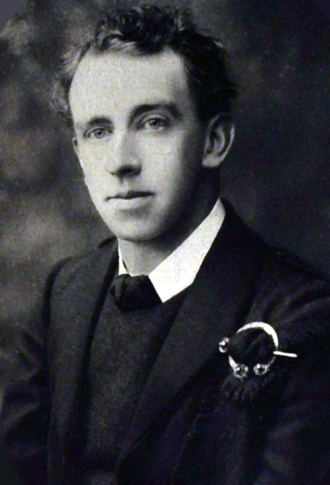
At 3:15, Brigade Commander Tom MacDonagh—poet and Pearse’s fellow teacher at St. Enda’s—handed General Lowe an order of unconditional surrender. With the help of the Capuchin priests, some of the younger boys were able to escape home. Father Augustine helped 14-year-old Vincent Byrne out a window, telling him, “You’ll live to fight for Ireland another day.”
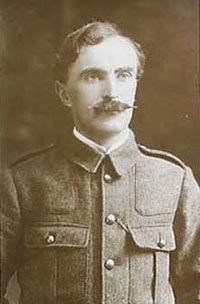
At Portobello Barracks, Skeffy Skeffington’s personal belongings—among them a personal letter from George Bernard Shaw—were being divided as souvenirs. Including a bundle of rejection letters from publishers, the items had been looted Thursday night when soldiers ransacked his home, in front of his wife Hanna Sheehy and their 10-year-old son Owen.

At 5 p.m., the flag of the Republic of Ireland was lowered. Nearby, a more battered version still fluttered lackadaisically at a crazy angle over the shell of the General Post Office. An hour later, Eamonn Kent and his men turned over their arms. Seeing that the British officers intended to strip Kent of his uniform, Fathers Augustine and Aloysius intervened, shaking hands with and offering their blessings to the imposing, handsome Commandant of Irish Volunteers. He and his men were marched off to Richmond Barracks.

A late report says Ina and Nora Connolly (who’d spent part of their girlhood in the Bronx as playmates of Elizabeth Gurley Flynn and her sisters) arrived in Dublin, to hear their own people talking abusively of “those crazy Shinners, rebel bastards.” Footsore, thirsty and hungry, they learned their father was wounded, likely dying.

Flag flown over the General Post Office- Dublin from Wikipedia

Flag flown over the General Post Office- Dublin
from Wikipedia

Reference: Rebels, by Peter De Rosa

Posted in Easter Rebellion, history, Ireland, writing | Tagged , , , , , , , , , , , | Leave a comment